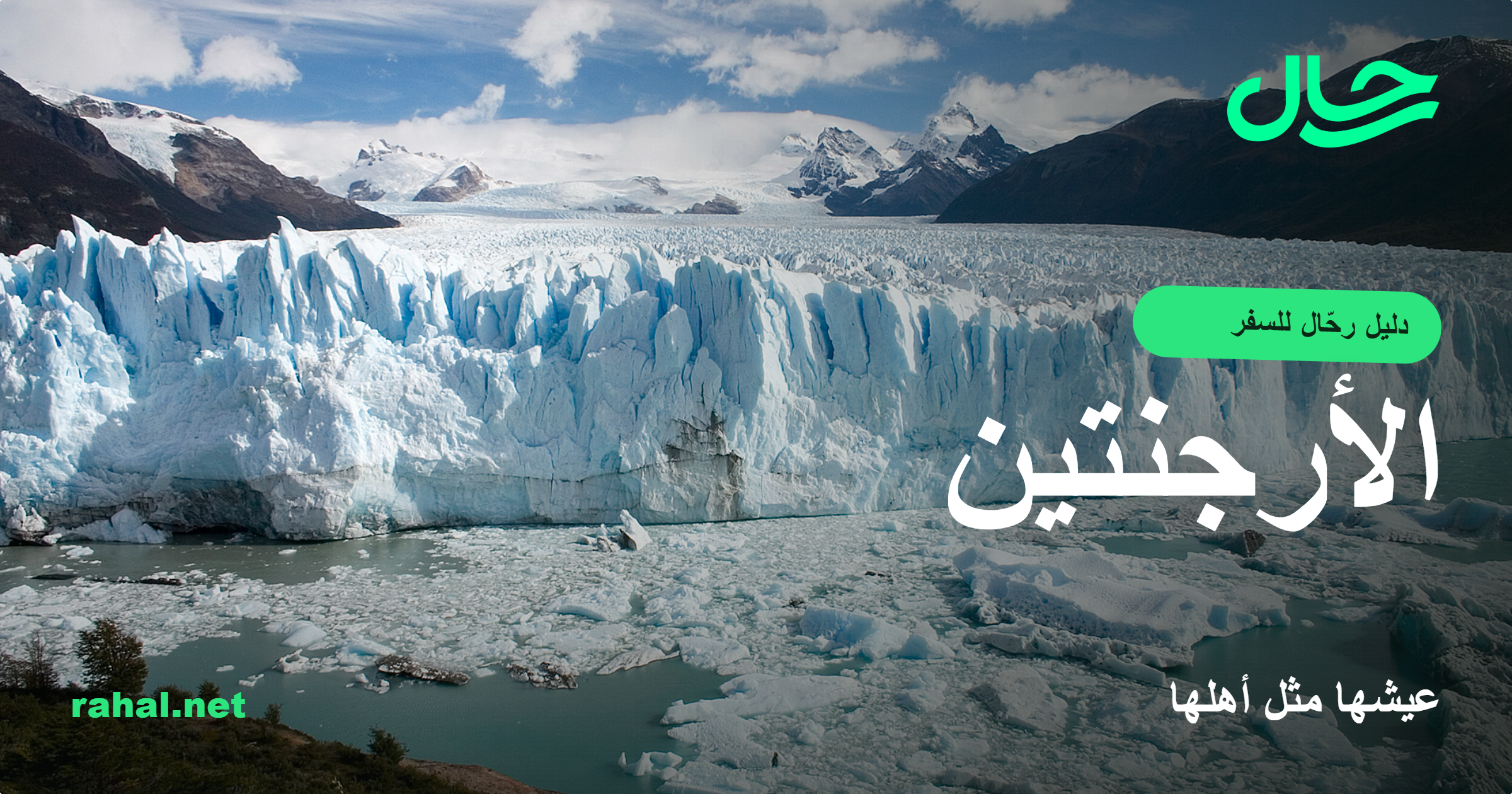
Argentina Like a Local: The Real Travel Guide for Iraqis
The mistake every tourist makes when visiting Argentina is expecting it to be "all of Latin America." They photograph a Maradona-themed stadium, eat some grilled meat, and go home. Locals live Argentina in a completely different way: they stay up until dawn and their restaurants don't open for dinner before nine, they sip mate in complete stillness like it's a religious ritual, and they know Buenos Aires isn't just a capital — it's a way of life. This article isn't a list of landmarks. It's a guide to living.
Who lives there?
Argentina has around 46 million people, nearly half of whom live in Greater Buenos Aires. It's the largest country in Latin America by area after Brazil, but with low population density: outside the capital you'll find large cities like Córdoba, Mendoza, and Rosario, and beyond them the vast Pampas and endless Patagonia.
The language is Spanish, of course, but Argentines speak it in a way that differs from the rest of Latin America: a distinctive accent influenced by Italian, and they use "vos" instead of "tú." If you learned Spanish in Mexico, you'll need a week to adjust.
The European heritage is very visible: waves of Italian, Spanish, German, and Arab immigration (yes, Arab!) shaped this people. Argentina has the second-largest Arab community in Latin America after Brazil, especially Lebanese and Syrian, and some have even reached the presidency. You'll hear Hispanicized family names like Makhoul, Khalil, and Nemer everywhere.
The daily rhythm is the opposite of what you're used to: lunch at 2 pm, dinner at 9 pm at the earliest, and parties starting after midnight. This isn't lateness — it's an entrenched culture. Trying to eat at 6 pm at any good Argentine restaurant means you'll be eating alone.
How much does daily life cost?
Argentina is one of the most financially complex places in the world due to its volatile economic history. Living alone in Buenos Aires costs roughly $1,412/month including rent. But that's for foreigners — local salaries are far lower.
A one-bedroom apartment in the city center ranges from $447–658/month, and a monthly transit pass costs only about $16. A full meal at a local restaurant (the "menú del día" includes a starter, main course, dessert, and drink) costs $8–15 — a value hard to find in many countries.
A budget traveler can live comfortably on $800–1,000/month, while comfortable living with a good apartment and regular restaurants needs $1,200–2,000.
What confuses visitors: cash is king here. In 2025–2026, Argentina has increasingly become a QR-code and digital-payment economy through Mercado Pago, but foreigners without a local account need cash or an international card. A Wise or Revolut card saves you on transfer fees.
Important warning: prices in Argentina change frequently due to its history of inflation. The figures here are for 2026 — verify them before your trip.
How do locals get around?
Buenos Aires has a comprehensive transit network: the Subte (metro), colectivos (buses), and trams, all running on a rechargeable SUBE card. A single ride costs $0.30–0.50, making it one of the cheapest transit networks in South America.
Buy a SUBE card at metro stations, lottery kiosks (Lotería), and small shops for about $5, and top it up as needed. Keep it — it's your ticket to everywhere.
Between cities, night buses are king. Argentina has one of South America's best long-distance bus networks: Cama class (nearly flat-bed seats) and Semi-cama class, with a meal, a movie, and total comfort. Buenos Aires to Iguazú takes 17–18 hours by bus, with tickets costing $50–80 — cheaper and more comfortable than domestic flights.
What surprises visitors: Uber exists and works, but due to complex regulations, some drivers openly prefer Cabify as a more widely used alternative. Both work well and are better than random street taxis.
What do they eat, and when?
Argentine breakfast: three medialunas (small local croissants) and French-style coffee. Dinner is after 9 pm, and Italian food is often the choice. And in between? A restaurant simply won't open at 5 pm, and that's normal.
Dishes you must try: asado — Argentine barbecue isn't just meat, it's a complete social ritual that lasts hours. Empanadas — pastries filled with meat, cheese, or vegetables, the top Argentine snack at $0.80–1.50 each. Milanesa — a crispy breaded cutlet found on every corner, the daily symbol of the Argentine home. Dulce de leche — milk caramel found in every dessert, cookie, and cake.
Buenos Aires cuisine was shaped by the fusion of Italian and Spanish immigration waves with the gaucho (Argentine cowboy) tradition of grilling, plus influences from the country's north. Argentine pizza has thick dough and a comically generous amount of cheese — and that's intentional, and wonderful.
A myth worth busting: that Argentine food is all meat. True that meat reigns supreme, but everyday cuisine is diverse: fresh pasta, pizza, fish in coastal cities, and wonderful fruit and vegetables from the interior.
Worth remembering: On Sundays, the Feria de Mataderos in the Mataderos neighborhood of Buenos Aires is an open-air market celebrating gaucho culture with folk music, regional food rarely found in the city, and horsemanship shows, running from 11 am to 8 pm. Admission is free.
The unwritten rules
Argentine greetings: a single cheek kiss on the right for everyone you meet or say goodbye to, even strangers at parties. This isn't overstepping — it's Argentine etiquette. Skip this kiss and you'll be seen as cold.
Everyday dress in Buenos Aires resembles any European city: effortless elegance, jeans and a coat. Gym wear is for the gym only, not the street — a noticeable difference from many other Latin American capitals.
Home hospitality: Argentines are genuinely generous. If invited, bring something (fruit or a cake). The mate ritual (yerba mate) is a friendship ceremony: the eldest person prepares the gourd and passes it around in sequence — don't say "thank you" until you're done with your turn, because "thank you" signals you don't want more.
Sensitive topics: Argentines take pride in their European heritage and distinguish themselves quite openly from "the rest of Latin America" — you'll hear this said frankly, and it can be uncomfortable for some. The dictatorship period (1976–1983) is a very sensitive, painful topic, remembered with real grief. Football isn't a neutral subject — it's identity, rivalry, and family.
You'll come across as clueless if you: try to eat dinner at 7 pm, order your steak "well done" at a good grill restaurant (considered offensive here), or mention Maradona and Messi in the same breath as if they're interchangeable.
Where do locals live?
Buenos Aires is divided into 48 neighborhoods (barrios), each with a distinct character: Palermo is lively and full of restaurants and nightlife, Recoleta has old-world elegance and tree-lined streets, San Telmo is bohemian with cobblestone streets and antique shops, Colegiales and Belgrano are quieter and more residential.
Locals live in neighborhoods like Almagro, Floresta, Devoto, and Villa Urquiza — far from tourist areas and with lower rents. For long-term rentals, look at Palermo or Villa Crespo at $400–600 for an apartment. For short-term stays as a visitor, use Airbnb or the Wunderflats platform.
Important to know: rental contracts in Argentina have historically been complex and tied to inflation. As a temporary resident or tourist, short-term options through apps are far easier than signing an annual lease.
🎵 Hear Argentina before you arrive
Tango isn't museum music — it's a living spirit in Buenos Aires. The "milonga" is the informal tango party held most days of the week, and many are open to visitors for a token entrance fee. But Argentines today also listen to cumbia, local reggaeton, Argentine rock (a massive, independent genre of its own), and folk music from the north. Bands and artists like Divididos, Manu Chao, and Mercedes Sosa will introduce you to the country's real spirit.
For the Iraqi traveler 🇮🇶
Visa: Iraqi passport holders need a mandatory Argentine visa. Apply at the nearest Argentine consulate. Requirements: a passport valid for at least 6 months from your entry date with two blank pages, two 4×4 cm photos, a signed application form, proof of financial means (bank statement or credit card), a round-trip flight reservation (not recommended to purchase before receiving the visa), and a hotel booking or invitation letter. The application fee is $150. Processing takes two weeks to a month — apply early. Confirm the latest information on the official website, cancilleria.gob.ar. (Verified: June 2026)
Flights: There are no direct flights from Baghdad or Erbil to Buenos Aires. The common route: fly via Istanbul (Turkish Airlines), Dubai, or Doha to reach São Paulo, Lima, or Bogotá, then take a second flight to Buenos Aires. Total travel time ranges from 18 to 28 hours depending on transit. The main international airport is Ezeiza (EZE), from which you can reach downtown via official taxi or the Tienda León bus for roughly $15.
Cash and cards: Argentina today increasingly relies on digital payment through Mercado Pago and QR codes. International cards (Visa and Mastercard) are accepted at restaurants and major hotels. A Wise or Revolut card is best for currency conversion. Carry a reasonable amount of cash in dollars for emergencies and small markets.
Halal food: Halal food is less widespread, but it exists. Buenos Aires has an Arab and Muslim community, especially in the Flores neighborhood, where you'll find halal restaurants, Arab shops, and a few mosques. The Zabihah app helps you locate the nearest one. Kosher (Jewish) cuisine is also widespread due to the large Jewish community, and it's an alternative for anyone needing non-pork meat.
Arab community: The Arab community — especially Syrian and Lebanese — has a long historical presence and exists across all social classes. You'll hear Hispanicized Arab names in public places, shops, and even in politics. This creates a pleasant sense of ease for Arab visitors.
The honest take
Argentina is wonderful for anyone who loves human warmth, deep culture, excellent food, and real music. Iraqi travelers tend to feel right at home because social generosity, love of long conversations, running late, and life centered on family and friends are all shared traits.
What's genuinely hard: the volatile economy. Prices may shift between when you plan and when you travel. Plan for a flexible budget.
What gets overlooked: Mendoza in the west and Bariloche in the south (Patagonia, blue lakes, and stories of fleeing Nazis for anyone who likes unusual history). Who it suits: the Iraqi traveler wanting an experience completely different from Europe, who wants to see social warmth with a Latin flavor, and who learns that "a bit late" can mean a full hour — and that's perfectly fine.
Bottom line: Argentina teaches you that life can be a beautiful mess: a volatile economy and a people with unbelievable generosity and love of life under any circumstances.
FAQ
Does an Iraqi passport need a visa for Argentina? Yes, Iraqi passport holders need a mandatory Argentine visa. Apply at the Argentine consulate in your country or the nearest one. The application fee is $150, and processing takes two weeks to a month.
How much does a trip to Argentina cost for an Iraqi traveler?A budget traveler (hostel, local food, public transport) needs $50–80 daily. A traveler at a mid-range hotel with restaurants needs $120–180 daily. This excludes the flight, which starts from $900–1,400 round-trip depending on transit and season.
Is halal food available in Argentina?It exists but is less widespread than in Europe. In the Flores neighborhood of Buenos Aires, you'll find a concentration of halal restaurants and Arab shops. The Zabihah app is useful. Kosher restaurants are also widespread and an option for anyone seeking non-pork meat.
Is English enough to get by in Argentina?English is less widespread here compared to Europe. It's sufficient in hotels and tourist areas, but in residential neighborhoods and local restaurants you'll need basic Spanish. Useful words: por favor (please), gracias (thank you), ¿cuánto cuesta? (how much?), la cuenta (the bill).
What's the best time to visit Argentina from Iraq?Two ideal windows: March–May (Argentine autumn, mild and pleasant weather, reasonable prices) and September–November (Argentine spring, when the purple jacaranda trees bloom in Buenos Aires). Avoid January and February if you dislike intense humid heat.
Do I need a car in Argentina?In Buenos Aires you never need one — public transport is excellent and Uber is available. Between cities, luxury night buses are the best option at competitive prices. A car is only useful if you want to fully freely explore the Argentine countryside and Patagonia.
Sources: Numbeo Buenos Aires, CostCity.org, WanderWallet, Culinary Backstreets, livingcostindex.com, cancilleria.gob.ar, embassyinformation.com. Last updated: June 2026.