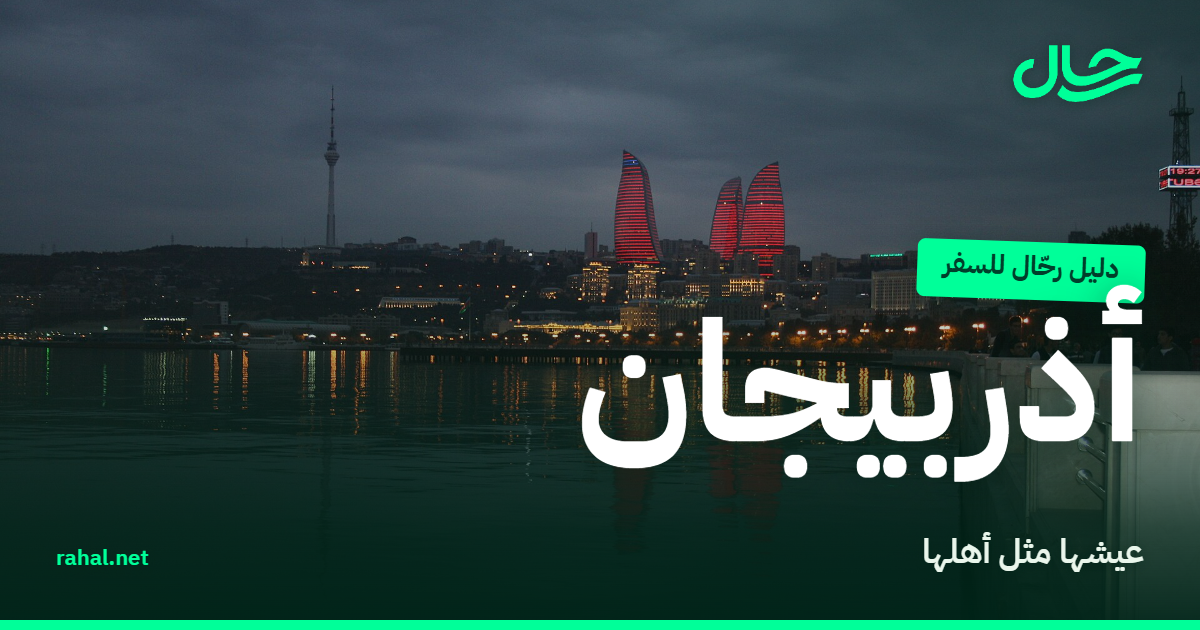
Azerbaijan Like a Local: The Real Travel Guide for Iraqis
Azerbaijan has become one of the most loved destinations among Iraqis in recent years, and rightly so. A country on the shores of the Caspian Sea, its capital Baku blending glass skyscrapers with an old town encircled by stone walls, its people majority Muslim with a culture close to ours, reasonable prices, and green, cool nature in summer. If you want to experience Azerbaijan like a local, you'll discover the country of "fire and water": hot springs, natural fire rising from the ground, and tea that never stops from morning to night. In this guide from the Travel Like a Local series, let's walk through the real Baku.
Who lives there?
Azerbaijan has around 10 million people, with Greater Baku home to roughly a quarter of them. The Azerbaijani people are majority Muslim (mostly Shia — a point of closeness with many Iraqis), but the state is secular by law, so society is open and diverse, especially in Baku.
The official language is Azerbaijani (close to Turkish), Russian is widespread among older generations, and English is growing among youth and in tourism. Arabic is limited, but Azerbaijanis are used to Arab and Gulf visitors, and you'll find signage and services in Arabic in tourist areas.
Azerbaijanis are naturally hospitable, calm, and respectful, and the religious and cultural ties make Iraqis feel at ease quickly.
How much does daily life cost?
Azerbaijan is reasonably priced for visitors. The currency is the manat (roughly pegged to the dollar, about 1.70 manat per dollar). According to Numbeo and other mid-2026 sources:
- Monthly expenses for one person excluding rent: roughly $500–550.
- A meal at a casual restaurant: $7–9.
- A one-bedroom apartment in central Baku: roughly $400–500/month, cheaper outside the center.
- Public transport is very cheap, with a single ride costing under half a dollar.
For comparison: the average local salary is modest, making the country comfortable for a visitor paying in dollars. Baku is more expensive than the rest of Azerbaijan, and prices drop the further you go toward the regions and mountains.
Cheap: transport, produce, fruit, and tea. Relatively expensive: upscale tourist spots in central Baku and imported goods.
How do locals get around?
Baku has a clean, cheap metro, the fastest way around the city, along with modern buses, all running on the "BakıKart" card. For taxis, the local Bolt app is the most popular and cheapest, and there are official purple metered "Badjek" taxis too.
Between cities, buses and trains connect Baku to towns like Guba, Gabala, and Sheki (green mountain regions). Distances are manageable — most tourist destinations are 2–4 hours from Baku.
What surprises visitors: Baku is cleaner and more organized than expected, and driving there is calmer than in other cities in the region.
What do they eat… and when?
Azerbaijani cuisine is close to our own: meat, rice, vegetables, and herbs. The national dish is plov, saffron rice with meat and dried fruit, similar in concept to our own rice dishes but with its own distinct flavor. Don't miss Azerbaijani kebab (shish and lyulya), dolma (stuffed grape leaves and vegetables), and dushbara (small dumplings similar to shishbarak, served in broth).
Tea is a national love story: served in pear-shaped glasses called "armudu," alongside jam, lokum, and sweets, in places called chaykhana (tea houses) — the heart of men's social life, much like our own coffeehouses.
Street food exists (döner and qutab, flatbread stuffed with greens or meat), and dinner is at a moderate hour for Azerbaijanis. A myth worth busting: Azerbaijani food isn't "Turkish" — it has its own character, even though it overlaps with Turkish and Iranian cuisine.
The unwritten rules
- Tea can't be refused. If offered tea at a shop or home, accepting it is polite and warm. Repeatedly declining hospitality upsets the host.
- Shoes come off when entering homes, and Azerbaijani homes are tidy, clean, and a source of pride for their owners.
- Hospitality is serious. If invited to an Azerbaijani home, bring sweets, and they'll offer you plenty of food and tea.
- Respect for elders is visible in their culture, and calm and gentleness are valued more than a raised voice.
- The topic of Nagorno-Karabakh (the war with Armenia) is very sensitive. Don't bring it up — only listen if they raise it themselves.
- Dress in Baku is casual and modern, but modesty is appreciated in religious areas and the regions.
Where do locals live?
Baku residents live in city apartments, and visitors typically search local sites and booking groups. For tourists, hotels and furnished apartments in central Baku (near the Old City "Icherisheher" and the seaside boulevard) are the most convenient, close to all the landmarks.
The tourist map is simple: the Old City, the Boulevard, and Fountain Square are the heart of life, with restaurants, cafés, and markets. And if you want nature and cool weather, regions like Guba, Gabala, and Sheki have mountain resorts loved by visitors.
🎵 Hear the country before you arrive
Music is half of any trip. Here's a playlist to set your mood for Azerbaijan before you even land — play it while you pack:
[Spotify playlist embed]
For the Iraqi traveler 🇮🇶
Visa (verified: June 2026): Azerbaijan offers Iraqis a visa on arrival valid for 30 days (with conditions), and there's also an electronic visa (ASAN E-Visa) system you apply for online before travel, issued within a few days — this is the safer, easier option to avoid any confusion at the airport. Prepare a passport with sufficient validity, a hotel booking, and a return ticket. Confirm the latest details before booking, as visa-on-arrival conditions change.
Flights: There are seasonal direct flights from Baghdad and Najaf to Baku, otherwise transit through Istanbul or Dubai, with the direct flight taking about 2.5–3 hours.
Money: Bring dollars and exchange them at currency exchange offices in Baku (widespread and with good rates). International cards work in malls, hotels, and restaurants, but carry cash in manat for markets, taxis, and tea houses.
Internet: Activate the free eSIM from Rahal that comes with any confirmed international booking (1GB for 3 days): request it on WhatsApp at least 5 days before your trip, so you land in Baku already connected, then get a local SIM if you're staying longer.
Food and worship: Halal food is the default (a Muslim country), mosques are present, and the cuisine is close to our own taste. Baku is one of the most comfortable cities for a Muslim Iraqi family.
Worth remembering: Don't limit yourself to Baku. Head out for a day or two to the regions: Guba and its mountain village Khinalig, Gabala with its nature and cable car, and Sheki with its historic palace. Gulf visitors escape to these areas in summer for the greenery and cool weather, and they're cheaper and calmer than the capital.
The honest take
The hard parts about Azerbaijan: the language barrier outside Baku and tourist areas, some restaurants and hotels inflating prices for visitors, and distances to the regions requiring some planning. And what gets overlooked? The green nature of the north, Gobustan with its rock carvings and mud volcanoes, and the "Yanar Dag" fire mountain that burns naturally from the ground. If you're drawn to a neighboring Caucasus destination with a cheaper visa, check out our guide on Georgia from the same series.
Bottom line: Azerbaijan suits families, honeymooners, and anyone seeking cool weather, nature close by, and a comfortable Muslim country. If you sort out your e-visa and get out of Baku, you'll see why it's become one of Iraqis' favorite destinations.
Before you travel to Azerbaijan ✈️
[Rahal CTA block]
FAQ
What's daily life like in Azerbaijan? A calm, organized urban life in Baku: a clean metro, chaykhana cafés over tea and jam, and a seaside boulevard for walking. The people are Muslim, calm, and hospitable, and the pace is slower and cleaner than other cities in the region. The mountain regions are far calmer, with green, village-like life.
Is Azerbaijan expensive to live in? Reasonable for visitors: a casual meal costs $7–9, a room in central Baku runs $400–500/month, transport is very cheap, and monthly expenses excluding rent run about $500–550 (mid-2026 figures). Baku is pricier than the regions, and the manat is stable, roughly pegged to the dollar.
What important customs should I know in Azerbaijan? Accept offered tea as a courtesy, remove shoes when entering homes, and hospitality is genuine and shouldn't be refused. Respect for elders and calm is valued, and the Nagorno-Karabakh conflict with Armenia is very sensitive — don't bring it up yourself.
What do Azerbaijanis eat every day? Plov (saffron rice with meat) is their national dish, along with kebab, dolma, and dushbara — all close to our own taste. Tea in small glasses with jam is a daily chaykhana tradition. All food is halal since it's a Muslim country.
Does Azerbaijan require a visa for Iraqis? It offers a visa on arrival valid for 30 days with conditions, but the safer option is the online ASAN E-Visa system before travel, issued within days (verified: June 2026). Prepare a valid passport, hotel booking, and return ticket, and confirm the latest visa-on-arrival conditions before booking.
What do tourists usually miss in Azerbaijan? The mountain regions. Most visitors stick to Baku, while Guba, Gabala, and Sheki have green nature, cool weather, and historic villages, and Gobustan has rock carvings and mud volcanoes, and "Yanar Dag" is natural fire burning from the ground. Gulf visitors know these areas well, but most Iraqis miss them.
Sources: Wikivoyage (CC BY-SA), CIA World Factbook (public domain), cost figures from Numbeo and various sources. Last updated: June 2026.