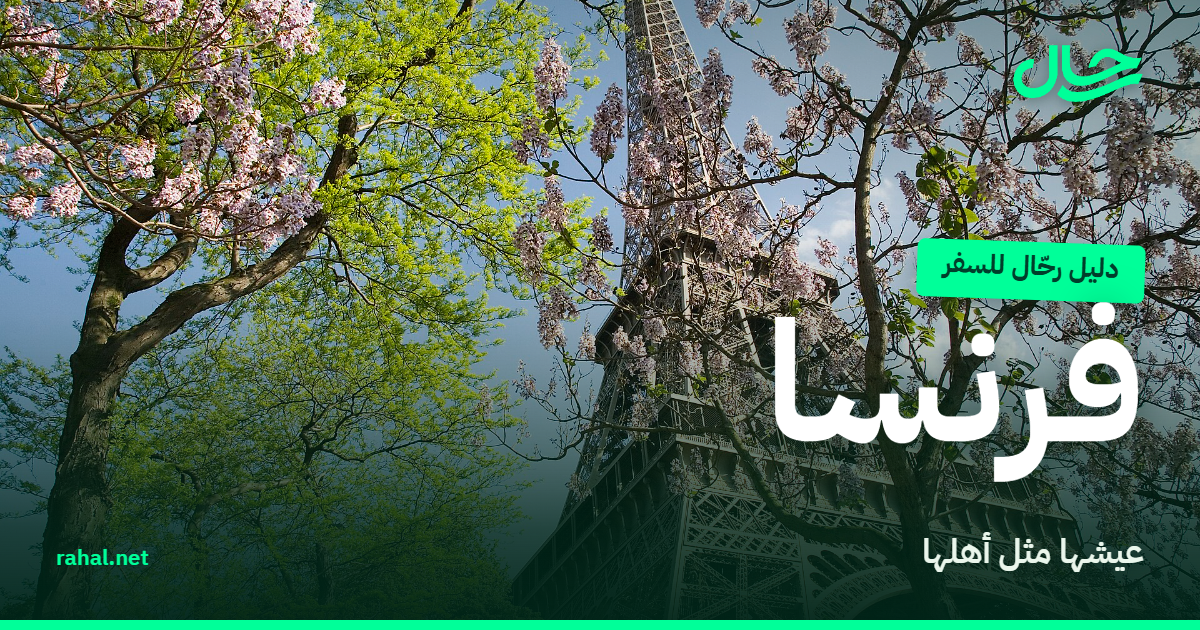
France Like a Local: The Real Travel Guide for Iraqis
France is the pinnacle of the travel dream for many Iraqis: Paris, the City of Light and love, the Eiffel Tower, fashion, and cafés where people sit for hours. But if you want to experience France like a local, you have to look past the postcard image: a real Parisian starts their day with a croissant and coffee standing at the bar, commutes on a crowded metro, walks and eats unhurried (food is a sacred ritual, not a quick bite), and has mastered "l'art de vivre" (the art of living). Here's the paradox: the French person who seems cold and aloof will open up to you completely if you speak a few words of French and show respect for their culture. In this guide from the Travel Like a Local series, let's walk through the real France — and talk honestly about the Schengen visa.
Who lives there?
France has around 68 million people, and Greater Paris has about 11 million. French society is diverse, with a very large Arab and Muslim community — one of the biggest in Europe — especially from North Africa, so halal restaurants, mosques, and Arab neighborhoods are widespread in Paris, Marseille, and Lyon.
The French language is a source of national pride, and the French deeply appreciate it when you try to speak even a few words. English is present in tourist areas but not as widespread as in some other European countries, and some French people prefer their own language.
The French are known for an initial reserve and outward "coldness" that tourists often mistake for arrogance. The reality is a culture built on formality: respect and politeness — starting with a "bonjour" before any conversation — is what opens doors.
How much does daily life cost?
France is expensive, and Paris is one of the priciest cities in Europe (though still cheaper than London). The currency is the euro. According to Numbeo (mid-2026):
- A one-bedroom apartment in central Paris: roughly $1,200–2,100/month, cheaper outside the center.
- A meal at a cheap restaurant: roughly $16–18, and a croissant with coffee at a café costs a few euros.
- A monthly metro pass (Navigo): reasonable compared to London.
- Comfortable living for one person in Paris: roughly $2,500–2,800/month including rent.
For comparison: Paris is cheaper than London or New York for housing, but still expensive. Other French cities (Lyon, Toulouse, Bordeaux) are noticeably cheaper than Paris. Supermarket food is reasonable, and cheese is relatively cheap (great if you're a fan).
Relatively cheap: cheese and bread, and many museums on certain days. Expensive: rent in Paris, restaurants, and coffee at touristy cafés.
How do locals get around?
Paris has a dense, old, and efficient metro (14 lines) that reaches nearly everywhere in the city, though it gets crowded at rush hour. There are also buses, trams, and the RER (fast suburban trains), all covered by a Navigo pass or tickets — the backbone of getting around Paris.
Taxis are expensive; apps like Uber and Bolt are cheaper. Walking and cycling (the Vélib' bike-share system) are excellent in Paris since the city is compact and walkable.
Between cities, the high-speed TGV train is excellent (Paris to Lyon is 2 hours, to Marseille 3 hours) — book early for cheaper fares. European distances are short too; you can reach London via the Eurostar in 2.5 hours through the Channel Tunnel.
What surprises visitors: transit strikes happen, so keep an eye on the news, and pickpocketing occurs on touristy metro lines — watch your belongings.
What do they eat… and when?
French food is an art and a global culture. Breakfast is simple: a croissant or bread with butter and jam, with coffee. Lunch and dinner are rituals: the French eat slowly, over a long sitting — a meal is sacred, not a quick stop. The baguette (the long loaf of bread) is a daily essential, bought fresh every day from the bakery (boulangerie).
Iconic dishes include: croissants, quiche, steak frites (steak and fries), ratatouille, and cheese (hundreds of varieties), plus French pastries (macarons, éclairs, tarts) — an art form in themselves.
Café culture is the center of life: the French will sit for hours over a single coffee, people-watching and chatting. Street food exists (crêpes, sandwiches), but French food is meant to be a sit-down experience, not something rushed.
A myth worth busting: not everything in France is expensive and fancy. Farmers' markets (marchés), bakeries, and cheese shops let you eat authentic French food affordably, and a picnic along the Seine is a cheap and beautiful Parisian tradition.
The unwritten rules
- "Bonjour" before anything else. The most important French rule. Never start a conversation (in a shop, restaurant, or asking a question) without saying "Bonjour" first. Skipping it is considered blatantly rude, and it's the real reason behind the French "coldness" many tourists experience.
- Try to speak French, even a few words. "Bonjour, Merci, S'il vous plaît, Parlez-vous anglais?" The effort opens hearts, while assuming everyone speaks English can come across as presumptuous.
- Eat unhurried. Don't rush at a restaurant, and don't ask for the bill quickly (it's seen as impolite haste). A meal is a social ritual.
- Calm and formality. The French are reserved in public places; being loud is considered inappropriate.
- Tipping (pourboire): service is usually included in the bill (service compris), but leaving a few euros for good service is appreciated.
- Dressing well is valued. Parisians care about appearance, and being well-dressed earns respect.
Where do locals live?
Housing searches happen on sites like SeLoger, LeBonCoin, and PAP. Rents in Paris are high and apartments are small (studios are common), so many people live in the suburbs and commute via the RER. Leases require a guarantor and significant paperwork, and newcomers typically start with furnished or shared housing.
The map: Paris is divided into 20 spiral-shaped "arrondissements." The center (1st–8th) is touristy and expensive, while the outer arrondissements (18th, 19th, 20th) are cheaper, more diverse, and lively. Arab and Muslim neighborhoods are concentrated around areas like Barbès and Belleville. For visitors, stay near a metro station in any central arrondissement to reach everything easily.
🎵 Hear the country before you arrive
Music is half of any trip. Here's a playlist to set your mood for France before you even land — play it while you pack:
For the Iraqi traveler 🇮🇶
Visa (verified: June 2026): Let's be honest about this one. France is part of the Schengen Area, and Iraqi passport holders need a short-stay Schengen visa (90 days within a 180-day period): apply through the official France-Visas platform, then attend an appointment at a VFS center for biometrics and documents. You'll need to show your bookings, travel insurance, financial means, and ties to Iraq to convince officials you intend to return. Processing can take a while, and refusal is possible. The upside of Schengen: one visa lets you travel across 29 European countries. Prepare a complete file and apply early (months ahead during peak season), and check the official France-Visas website for the latest requirements.
Flights: There's no reliable direct flight from Iraq to Paris. Typical transit routes go through Istanbul, Doha, Dubai, or Frankfurt, with total travel time around 7–11 hours including transit.
Money: France is very much a card-based country, with card payments accepted everywhere. Activate your Iraqi card for international use, and carry some euros in cash for small bakeries, markets, and emergencies.
Internet: Activate the free eSIM from Rahal that comes with any confirmed international booking (1GB for 3 days): request it on WhatsApp at least 5 days before your trip, so you land in Paris already connected, then get a local SIM if you're staying longer.
Halal food and community: France has the largest Muslim community in Europe, so halal restaurants are extremely widespread (especially Maghrebi cuisine: couscous and tagine), mosques are plentiful, and Arab neighborhoods exist in Paris, Marseille, and Lyon. Halal meat is easy to find, and you won't have trouble finding food that suits you.
Worth remembering: Don't book a non-refundable flight or hotel before the Schengen visa is in your hand. If you book through Rahal, choose a changeable fare and keep the WhatsApp support team informed of your situation. The upside of Schengen: plan a multi-country trip (Paris, Amsterdam, Rome) on a single visa.
The honest take
The hard parts about France: the difficult, lengthy Schengen visa process for Iraqis, the high cost of Paris, the initial French "coldness" that requires patience, and strikes and pickpocketing in tourist areas. And what gets overlooked? Everything outside Paris: the French Riviera (Nice, Cannes) with its beaches, Provence with its lavender fields, the Loire Valley with its castles, and the Alps. If you're also drawn to a neighboring Schengen destination on the same visa, check out our guide on Italy from the same series.
Bottom line: France suits lovers of culture, art, and romance who have a decent budget and patience for the visa process. If you prepare a strong Schengen file and learn a few words of French, Paris offers a kind of magic no other city can match.
FAQ
What's daily life like in France?A life that values "l'art de vivre": croissant and coffee in the morning, commuting by metro, and unhurried meals over long sittings (a meal is a sacred ritual). The French are reserved and formal but open up once you respect their culture and speak a few words of French. Cafés are the center of social life, and fresh baguettes are a daily habit.
Is France expensive to live in?Yes, and Paris is one of the priciest cities in Europe (though cheaper than London): a room in central Paris runs $1,200–2,100/month, a cheap meal costs $16–18, and comfortable living for one person runs roughly $2,500–2,800/month (Numbeo, mid-2026). Other cities are cheaper, and cheese and bread are reasonably priced.
What important customs should I know in France?Say "bonjour" before any conversation (the most important rule — skipping it is considered rude), try to speak a little French to open hearts, and eat unhurried without rushing the bill. Public places call for calm and formality, dressing well is appreciated, and a few euros tip for good service is a nice gesture.
What do the French eat every day?Croissant and coffee in the morning, a fresh baguette daily, and unhurried meals over long sittings. Iconic dishes include steak frites, quiche, ratatouille, and cheese (hundreds of varieties). Cafés are the center of life, and farmers' markets and bakeries make authentic French food affordable.
Does France require a visa for Iraqis?Yes, a short-stay Schengen visa (90/180 days) through the France-Visas platform (verified: June 2026): online application, biometrics appointment at a VFS center, and proof of bookings, insurance, financial means, and ties to Iraq. Processing can take time and refusal is possible, but the visa lets you travel across 29 European countries. Apply early and check the official France-Visas site.
What do tourists usually miss in France?Everything outside Paris. The French Riviera (Nice, Cannes, and nearby Monaco) with its beaches, Provence with its lavender fields and villages, the Loire Valley with its royal castles, and the Alps for skiing. Paris is enchanting, but the real France is far bigger and more beautiful than its capital.
Sources: Wikivoyage (CC BY-SA), CIA World Factbook (public domain), cost figures from Numbeo. Last updated: June 2026.