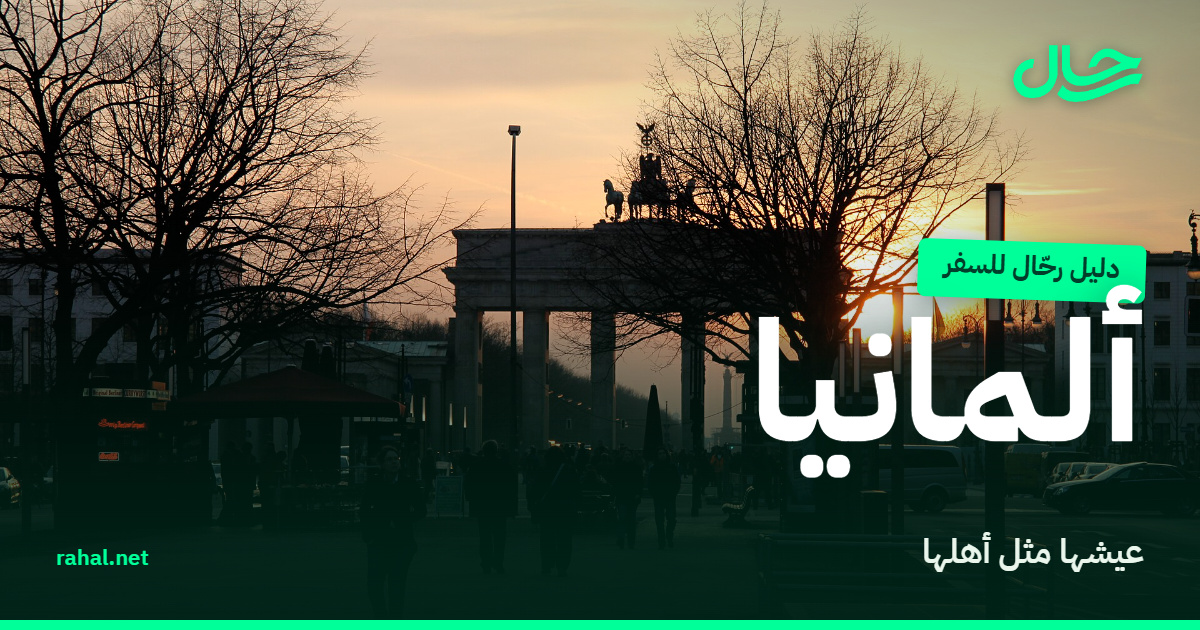
Germany Like a Local: Living It, Not Just Photographing It
The mistake every tourist who comes to Germany makes is treating it like an open-air museum: photograph Neuschwanstein Castle, stand in front of the Brandenburg Gate, go home. Locals live Germany a completely different way: they ride their bikes in the rain, and they know the best döner in the world isn't in Turkey — it's in Kreuzberg, Berlin. This article isn't a list of landmarks. It's a guide to living.
Who lives there?
Germany has around 84 million people, with a median age of 45 — a notably mature and organized society. Over 75% of the population lives in cities. The official language is German, of course, but at home you'll hear Turkish, Arabic, Russian, and Polish, especially in Berlin, Cologne, and Frankfurt.
Religion is diverse: about 50% Christian, 5% Muslim (Western Europe's largest Muslim community), with many identifying with no religion at all. What surprises many: Germany is the third-largest recipient of refugees and migrants in the world, which has genuinely created a multi-layered social fabric, not just in name.
Daily rhythm is strict and orderly: work starts early, the week wraps up Friday, and Sunday is a real day of rest (many shops are legally closed). This order feels strange at first, but becomes a comfort once you get used to it.
How much does daily life cost?
Berliners earn an average of €2,675 net per month (full-time employee), which reflects the price level. A meal at a budget restaurant costs around €12, while a real working lunch often comes from the supermarket for under €5.
Rent is the biggest cost: a one-bedroom apartment in central Berlin runs €1,100 to €1,300 a month, dropping to €700 to €900 outside the center. The monthly transport pass (Deutschland-Ticket) at €58 covers all public transport across the entire country — one of the best transit deals in Europe.
Surprisingly cheap: fruit and vegetables at weekly markets, local supermarkets (Aldi and Lidl), and internet service (around €35-45 a month for excellent speed). Expensive: going out to mid-range restaurants and museum entry if you go alone.
(Numbeo Berlin 2026 figures: numbeo.com/cost-of-living/in/Berlin)
How do people get around?
80% of Berlin and Hamburg residents daily use a mix of the U-Bahn (underground metro), S-Bahn (surface train), tram, and bicycle. A car in big cities is a burden, not an asset — parking is rare and expensive.
The bicycle isn't a luxury here, it's daily transport for millions of Germans. Every city has a bike-lane network separated from the street. You can rent through the Nextbike or Donkey Republic apps for €8-15 a day.
Between cities, high-speed trains (ICE) are king. Berlin to Munich is 4 hours, Frankfurt to Hamburg 2 hours. Buy Sparpreis (discount) tickets in advance on the DB app instead of at station counters — the difference can be €40-60 for the same trip.
What confuses outsiders: even if there's no one at the gate, riding public transport without a ticket carries a €60 fine. Undercover inspectors appear suddenly, wearing very serious faces.
What do they eat and when?
German breakfast is a category of its own: fresh dark bread, cheese, spreads, eggs or cured meat, and black coffee. Not toast and a boiled egg, but a variety you won't expect. Breakfast is often eaten at home, and breakfast cafés open from 8am.
Lunch is the main meal for office workers, eaten from noon to 2pm. Dinner at home is light and cold (roughly the same as breakfast). Restaurants serve dinner from 6 to 10pm.
Dishes worth trying: a fresh-baked Brezel (pretzel) from the morning bakery, not packaged; Bavarian Schnitzel with warm potato salad; and the German döner kebab. This last one was invented by a Turkish-Berliner in the seventies and became a German icon: tahini, fresh vegetables, and locally raised meat, found on street corners for €5-7.
The myth worth busting: German food is heavy and bland. That's true for maybe 10% of it. Anyone eating at weekly markets and immigrant restaurants discovers an unbelievably diverse cuisine.
Tip worth remembering
Thursday evenings at Markthalle Neun in Berlin (Kreuzberg neighborhood) host Street Food Thursday, food from 30 countries in one place. Entry is free.
The unwritten rules
German greetings are serious and direct: a firm handshake in business settings, and sometimes a cheek kiss between friends. It's not an insult if they don't smile at a first meeting — that's normal and doesn't mean they're unfriendly.
Everyday dress: Germans don't dress formally without a reason. Clean jeans and a t-shirt are acceptable in 90% of places. Athletes wear gym clothes on transit and in shops without a second thought.
Home hospitality: if invited to a German home, bring something (flowers or sweets), and take off your shoes at the door even if not asked. Being 15 minutes late isn't acceptable unless you called ahead.
Off-limits topics: World War II and Nazism are extremely sensitive subjects, discussed with genuine shame and remorse. Don't joke about them or use them to try to connect. What they take pride in: precision, engineering, and football (one team per city is part of local identity).
A visitor looks rude if they: litter in the street, talk loudly on the metro, or stand on the left side of an escalator (left is for walking, right for standing — a strict social rule).
Where do locals live?
Germans prefer renting over buying, unlike many countries. Most live in apartments in mixed neighborhoods away from tourist areas.
In Berlin: locals live in Neukölln, Tempelhof, Lichtenberg, Spandau, not in the "dead" center that belongs to tourists and offices. To rent like a local, use ImmoScout24 or WG-Gesucht (for shared apartments). Airbnb is 50% pricier and feels less like real life.
Rental norms: leases run long (a year or more), and even simple agreements are done on paper with a signature. A deposit equal to two or three months' rent is required upfront. If you're a visitor wanting an apartment for a month, use Wunderflats or Airbnb.
🎵 Hear Germany before you land
German music isn't just Beethoven and Bach — locals' daily listening includes Berlin electronic techno that emerged after the Wall fell, German-language hip-hop, and Turkish-community music that's become its own independent culture. Berghain in Berlin is a legendary electronic music venue, its entry line more famous than the music itself.
For the Iraqi Traveler 🇮🇶
Visa: An Iraqi passport requires a mandatory Schengen visa to enter. Apply through the German consulate in Baghdad or via the VFS Global center in Erbil. Usual requirements: a valid passport, confirmed bookings, travel insurance, and 3 to 6 months of bank statements. Application fee is around €80. Processing takes two weeks to a month, so apply early. Confirm details on the official VFS Global Iraq website. (Verified: June 2026)
Flights: flydubai and Gulf Air connect Baghdad and Erbil to Frankfurt and Munich with a layover. Turkish Airlines flies from all Iraqi airports to Frankfurt, Munich, and Berlin via an Istanbul layover. There are currently no direct flights.
Cash and cards: Germany relies on cash more than many European countries. As of 2026, many small restaurants and local shops still don't accept cards. Bring enough euros with you. Visa or Mastercard work at large shops and major restaurants. A Wise or Revolut card is the best option for transfers without high fees.
Halal food: Germany is one of the best European countries for halal food. Berlin, Cologne, and Frankfurt are full of Turkish, Arab, and Pakistani halal restaurants. Use the Zabihah app to find the nearest halal restaurant.
Community: The Iraqi community has a notable presence in Berlin (especially Neukölln and Spandau), Hanover, and Hamburg. Facebook groups like "Iraqis in Berlin" have a lot of updated practical information.
The Honest Take
Germany is wonderful for anyone who likes order, organized living, clean nature, and transport that runs on time. Iraqi travelers usually like it more than they expect, especially coming from a daily environment with more chaos. What's genuinely hard: paper bureaucracy — Germans love official documents for everything: a visa, a lease, opening a bank account, a residency application. Keep that in mind.
What's underrated? Dresden and Leipzig in eastern Germany. Cheaper, prettier, and calmer than Berlin and Munich, with Cold War history you experience live, not from a book. Who it suits: the Iraqi traveler who wants to live in a genuine European environment, escape the noise, and learn something new about organizing life. Not for someone who wants to snap photos and leave in a day.
The Bottom Line
Germany teaches you how to live within a system you didn't expect to love, and surprises you with how much human warmth exists beneath its formal surface.
FAQ
Does an Iraqi passport need a visa for Germany?
Yes, an Iraqi passport requires a mandatory Schengen visa to enter Germany and all 26 Schengen countries. Apply at the German consulate in Baghdad or the VFS Global center in Erbil. Apply at least a month before your travel date since appointments can be booked up.
How much does a Germany trip cost for an Iraqi traveler?
A budget traveler needs roughly €60-80 a day (hostel or Airbnb stay, supermarket food and döner, and public transport). A traveler at a mid-range hotel with restaurant meals needs €130-180 a day. This is separate from the flight ticket, which ranges $500-900 round trip depending on season.
Is halal food available in Germany?
Yes, and abundantly, especially in Berlin, Cologne, Frankfurt, and Hamburg. The large Turkish and Arab community has made halal restaurants present in almost every neighborhood. The Zabihah app helps you find the nearest halal restaurant in any German city.
Is English enough in Germany?
It's enough in big cities, hotels, tourist restaurants, and major shops. The younger generation (under 40) usually speaks excellent English. In residential neighborhoods and small shops, simple German words open doors: Danke (thank you), Bitte (please/you're welcome), Entschuldigung (excuse me).
What's the best time to visit Germany from Iraq?
Two best windows: May and June (pleasant weather, reasonable prices, moderate crowds) and September and October (autumn colors, Oktoberfest in Munich, gorgeous weather). Avoid July and August if you don't like crowds and high prices.
Do you need a car in Germany?
Inside big cities, you never need a car. Public transport is excellent and faster. Between cities, ICE trains beat domestic flights (no airport congestion). A car is only useful if you want to explore rural Bavaria, the Black Forest, and small villages.
Sources: Wikivoyage (CC BY-SA), CIA World Factbook (public domain), cost figures from Numbeo Berlin, VFS Global Iraq for visa information. Last updated: June 2026.