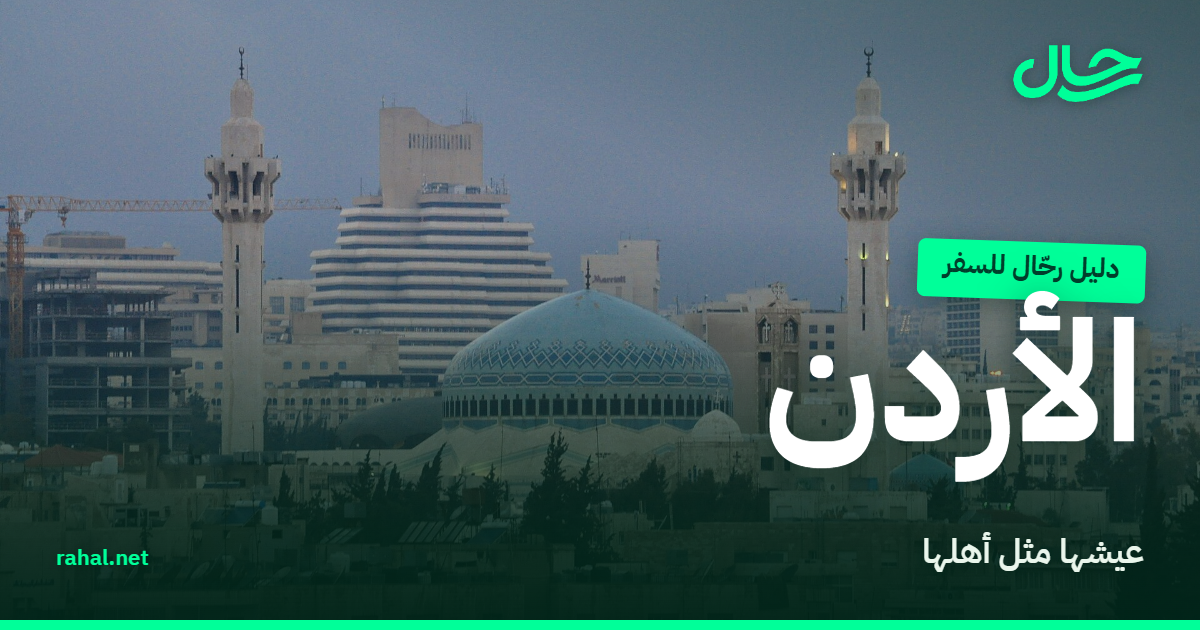
Jordan Like a Local: The Real Amman Beyond "I Know It Already"
Jordan isn't a foreign country to Iraqis: since 2003, Amman has been a second home for hundreds of thousands of Iraqi families, between medical treatment, study, residency, and travel. But there's a big difference between "knowing Amman" and "living Amman the way its people do." If you want to live Jordan like a local, you need to know why the whole city is built from the same white stone, why a salary in Jordanian dinars looks small but carries big value, and how mansaf isn't just a dish — it's a whole occasion with its own rules. In this guide from the Travel Like a Local series, we'll walk you through the real Jordan: from Amman's seven hills to knafeh in downtown, from the "service" taxi system to a plain-coffee sit-down, and everything an Iraqi traveler needs.
Who lives there?
Jordan has over 11 million people, with Greater Amman alone home to nearly half of them. The fact that explains the country's spirit: Jordan is a society built on hospitality and refuge in their deepest historical sense — from the country's original tribes, to Palestinians, to Iraqis, to Syrians. Each wave added its own flavor, which is why you'll find an Iraqi restaurant next to a Levantine one next to a Jerusalemite one in Amman, all of them "people of the country."
Society is conservative by nature and holds onto tribal traditions, but West Amman with its malls, cafés, and universities is a thoroughly modern city. The difference between East Amman (working-class, cheaper, closer in spirit to old Baghdad) and West Amman (modern, pricier) is the first geographic and social lesson in the city.
Iraqis have a built-in advantage: the Jordanian dialect is understood 100%, Iraqis are known and liked there, and most Amman residents have an Iraqi neighbor, friend, or business partner.
How much does daily life cost?
The first fact to burn into your head: the Jordanian dinar is one of the strongest currencies in the world, worth $1.41. So when a price looks small in numbers, multiply it and do the math properly. According to Numbeo and other mid-2026 sources:
- Average net monthly salary in Amman: around 500 Jordanian dinars (roughly $700).
- A meal at a casual restaurant: about 5 dinars ($7).
- Renting a one-bedroom apartment in central Amman: 300 to 400 dinars, dropping to 150-250 dinars in outlying areas.
- A local transport ride: under a dinar.
The irony every resident lives with: Jordan has limited incomes and prices that aren't cheap, so the average Jordanian family counts carefully by month's end. For an Iraqi visitor, prices are close to Baghdad's for restaurants and services — a bit pricier in some places, cheaper in others.
What's cheap: fruit, vegetables, casual food, and transport. What's expensive: gas, electricity, cigarettes, and anything imported, since the country imports most of what it needs.
How do people get around?
Amman is a city of hills: seven original hills, now more, and its streets are all climbs, descents, and stairs. Real public transport is limited, so locals rely on three things: private cars, the yellow taxi, and Uber and Careem apps, which have become essential to young people's and visitors' lives. The white "service" taxi (shared, running fixed routes) exists for casual trips, much like Baghdad's kia routes.
A new Bus Rapid Transit (BRT) line has started changing the equation on certain routes, but it still doesn't cover the whole city.
Between cities, JETT buses are the standard option: Amman to Aqaba in four hours, to Petra in three. The whole country is small: from Amman to the Dead Sea in under an hour — one of Jordan's best features, everything is close.
What do they eat… and when?
The undisputed king of the Jordanian table: mansaf. Meat over rice with shrak bread, topped with hot jameed yogurt sauce, eaten at gatherings standing around a single tray, with the right hand only among those who know the tradition. If you're invited to a mansaf, know that you've moved from "guest" to "family."
In daily life, Jordanian breakfast is hummus, foul, and falafel from casual restaurants (Hashem in downtown being the most famous address), and lunch is the main meal around 2 to 3pm after work. Dinner is light, or a shawarma night out.
Knafeh is a national story of its own: Nabulsi knafeh with cheese, served hot, sold by the kilo, with the line at Habiba in downtown being part of the city's folklore. Don't finish your trip without it.
And a myth worth busting: Jordanian food isn't just mansaf and grills. Home cooking (maqluba, molokhia, stuffed vegetables, freekeh) is rich and close to ours, with maqluba especially being the sacred Friday family meal, just like at home.
The unwritten rules
- Plain coffee has a protocol. At gatherings and diwans, it's poured into a small cup; you drink it standing or seated depending on the occasion, and if you've had enough, shake the cup left and right before handing it back — the signal for "no more." Hand it back without shaking, and they'll pour you another.
- "Tfaddal" is always serious. A Jordanian doesn't invite you as a courtesy, and repeatedly refusing hospitality upsets the host. Accept, even something small.
- Tribe is a respected subject. Names, tribes, and origins are part of Jordanian identity — listen and learn, but don't joke about it.
- Friday morning, the country sleeps. The weekend is Friday and Saturday, and before Friday prayer the streets are empty and shops closed, with life (and restaurant crowds) picking up right after.
- Dress is free in West Amman and conservative in the east. Same city, two different moods. Relax in the Western malls and cafés, and respect the local character in downtown and the markets.
- Greetings come with a long courtesy exchange. "How are you, what's the news, hope you're well, is the family well?" A full sequence before any topic even begins. Answer in the same spirit and don't rush past it.
Where do locals live?
House-hunting in Jordan runs through an app every Iraqi already knows: OpenSooq, the country's top real estate marketplace. Leases are usually annual, payment is commonly upfront in installments (every six months or a year), with a one-month deposit.
The housing map is clear: West Amman (Abdoun, Sweifieh, Deir Ghbar) for the wealthy, companies, and embassies, at much higher prices. Central areas (Gardens, Tla' Al-Ali, Jubeiha near the universities) for the middle class and students. East Amman and downtown are cheaper, more working-class, and full of life.
Iraqis have historically clustered in the Gardens, Rabieh, and Tla' Al-Ali areas, which is why you'll find Iraqi restaurants, masgouf, and markets selling Iraqi products there. If you're missing home while in Amman, it's one street away.
🎵 Hear the country before you land
For the Iraqi Traveler 🇮🇶
Visa (verified: June 2026): Jordan requires a prior visa for Iraqi passport holders, applied for through the Jordanian embassy in Baghdad or its consulates, with a processing period, so don't leave it to the last minute. There's a visa-on-arrival exception for holders of the official businessman card and specific categories. Procedures and facilitations change from time to time, especially during medical treatment and tourism seasons, so confirm with the embassy or an approved travel office before booking.
Flights and roads: Daily direct flights from Baghdad to Amman (just an hour and a half), and seasonal flights from Najaf and Basra. The land route through the Trebil crossing is well known to every Iraqi, but factor in road hours and procedures.
Money: Iraqi international cards work without issue at malls, hotels, and larger restaurants, and ATMs are widespread. But keep cash in Jordanian dinars for service taxis, casual shops, and downtown. And watch the strength of the dinar as you calculate: five dinars isn't five thousand Iraqi dinars, it's seven dollars.
Internet: Local SIMs are available at the airport but at visitor prices. Cheaper option: activate the free eSIM from Rahal that comes with any confirmed international booking (1GB for 3 days): request it on WhatsApp at least 5 days before your trip, and land in Amman with data already working.
Food and medical treatment: Everything is halal, and Iraqi restaurants are widespread. If your trip is for medical treatment, like thousands of Iraqis every year, Amman's hospitals are among the best in the region, and experienced travelers' tip: schedule your medical appointments early in the week so the end of it is free for Petra or the Dead Sea.
Tip worth remembering
Don't go to Jordan and come back without at least one day outside Amman. The Dead Sea is under an hour, Jerash is 45 minutes, and Petra is three hours. Amman residents themselves escape their city's traffic to these places — do the same.
The Honest Take
What's tough about Jordan: the cost of living relative to income, Amman's traffic and hills that show no mercy to drivers or pedestrians, and limited public transport. What's underrated? Everything outside the well-known tourist triangle: Wadi Rum and a night in a Bedouin camp under stars unlike any you've seen, Aqaba and its cheap Red Sea diving, and Ajloun Castle and the northern forests that break the "Jordan is all desert" image. If you want to compare with another nearby neighbor, read our guide to Lebanon from the same series.
The Bottom Line
Jordan suits families, medical travelers, students, and any Iraqi who wants a nearby country that feels like being among family. If you arrange your visa in advance and account properly for the Jordanian dinar, Amman welcomes you like a relative.
FAQ
What's daily life like in Jordan?
A conservative, family-centered life at a calm pace: work ends around midday, family lunch is the main meal, and evenings are spent at cafés and homes. West Amman is modern with its malls and restaurants, while the east and downtown keep the working-class spirit. The weekend (Friday and Saturday) is for family maqluba and trips to the Dead Sea and Jerash.
Is Jordan expensive to live in?
Jordan is a country whose prices outpace its people's income: the average salary in Amman is around 500 dinars ($700) and central-area rent runs 300 to 400 dinars (mid-2026 figures). For an Iraqi visitor, prices are close to Baghdad's: a casual meal for 5 dinars, and cheap transport. Watch out: the Jordanian dinar equals $1.41, so small numbers can be deceiving.
What are the important customs to know in Jordan?
Plain coffee has a protocol: shaking the cup means "thanks, that's enough." Hospitality is serious and shouldn't be refused, and mansaf is eaten standing, with the right hand, at gatherings. Tribe and lineage are respected topics not to joke about, and before Friday prayer the whole country is at a standstill.
What do Jordanians eat every day?
Breakfast is hummus, foul, and falafel; lunch is the main meal — maqluba, molokhia, or stuffed vegetables at home — with mansaf as the king of occasions. Nabulsi knafeh is a daily national sweet, not a seasonal one. The food is very close to Iraqi cuisine with a Levantine touch.
Does Jordan need a visa for Iraqis?
Yes, a prior visa through the Jordanian embassy in Baghdad or its consulates, with a visa-on-arrival exception for holders of the businessman card and specific categories (verified: June 2026). Procedures change and ease up during medical and tourism seasons, so confirm with the embassy or an approved office before booking.
What do tourists usually miss in Jordan?
Wadi Rum. Everyone goes to Petra and heads back, while a single night at a Bedouin camp in Wadi Rum, with a zarb dinner cooked under the sand and a sky full of stars, is the experience people talk about for years. Add Aqaba's cheap diving and Ajloun's northern forests, which break every stereotype about Jordan.
Sources: Wikivoyage (CC BY-SA), CIA World Factbook (public domain), cost figures from Numbeo and multiple sources. Last updated: June 2026.