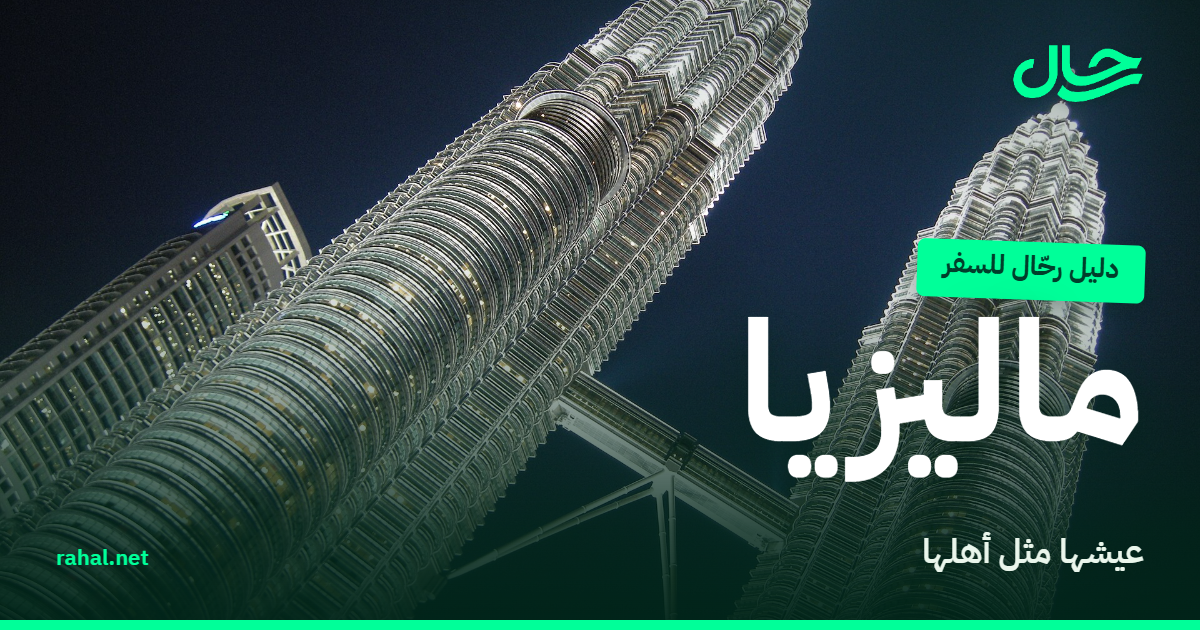
Malaysia Like a Local: The Real Kuala Lumpur, No Visa Required
Let's start with the news that deserves to be the first line: Malaysia lets Iraqis in visa-free for 30 days. Read that again. A green Southeast Asian country, majority Muslim, halal by default, English-speaking, and easy on the Iraqi wallet — all without a visa appointment, an embassy visit, or any waiting. If you want to live Malaysia the way its people do, you'll discover a country of three cultures (Malay, Chinese, and Indian) sharing one table, "mamak" restaurants open 24 hours as the heart of social life, and a daily afternoon downpour that washes the city and disappears. In this guide from the Travel Like a Local series, we'll walk you through the real Kuala Lumpur and everything an Iraqi traveler needs to know.
Who lives there?
Malaysia is home to over 34 million people, and its mix is the secret to its personality: a Muslim Malay majority, a large Chinese community, and an Indian community (mostly Tamil), each bringing its own language, food, and holidays. The result: a country that officially takes the day off for Eid al-Fitr, Chinese New Year, and the Hindu festival of Diwali — and everyone celebrates with everyone else.
Islam is the official religion, the call to prayer is heard in every city, and the mosques are architectural gems (the pink Putra Mosque and the steel Putrajaya Mosque). At the same time, the country coexists in a very practical way: Chinese and Hindu temples sit on the same streets, and every community's space is respected.
The golden advantage for visitors: English is close to a second language, from the Grab driver to the market vendor, making the language barrier in Malaysia the lowest in East Asia. And the local word that'll stick in your head: "lah," tacked onto the end of any English sentence — "Can lah!" means "sure, no problem."
How much does daily life cost?
According to Numbeo (mid-2026) for Kuala Lumpur:
- Monthly living costs for one person, excluding rent: around 2,600 ringgit (roughly $590).
- Average net monthly salary: around 6,500 to 7,000 ringgit ($1,500).
- Renting a one-bedroom apartment in the city center: around 2,800 ringgit ($630), dropping noticeably outside the center along the train lines.
- A meal at a casual mamak restaurant: 10 to 15 ringgit (about $3), and an unlimited monthly transport pass (My50): just fifty ringgit.
This is one of the best equations in Asia: a modern city of towers, malls, and trains, at the prices of a modest one. A residential condo with a pool and gym is the normal standard, not a luxury.
What's cheap: food (cheap enough that cooking at home feels like the odd choice), transport, and subsidized gasoline. What's relatively expensive: cars (high import taxes) and Western luxury goods.
How do people get around?
Kuala Lumpur is woven together by a rail network: LRT, MRT, and monorail, clean, air-conditioned, and covering the city and its suburbs, with fares starting around a ringgit and a half. The Touch 'n Go card is the country's wallet: use it for trains, payments in shops, and highway tolls.
For taxis, the national and regional app is Grab (a company actually born in Malaysia): clear pricing, reliable drivers, and card payment. Skip traditional taxis unless they're running the meter.
Between cities, modern buses are excellent and cheap (Kuala Lumpur to Penang in four and a half hours), the ETS express train serves the west coast, and domestic flights (AirAsia was born here too) are cheap for the islands and Borneo.
Watch for the daily weather rule: the afternoon rain. Almost every day around late afternoon, a strong tropical downpour hits for half an hour and then clears. Locals plan around it without worrying, and you should always keep a small umbrella in your bag.
What do they eat… and when?
This is where Malaysia outdoes itself. The national breakfast is nasi lemak: rice cooked in coconut milk, served with sambal (chili paste), peanuts, fried anchovies, and an egg, wrapped in banana leaf. Sounds unusual? Try it once and you'll be craving it every morning.
The heart of social life is the mamak: 24-hour Indian-Muslim restaurants serving roti canai (a thin flatbread dipped in curry) and teh tarik ("pulled" milk tea, poured cup to cup until it froths). A late-night mamak session with friends is exactly what a café sit-down is for us: chatting, football, and tea until midnight.
The diversity shows up on your plate: Malay lunch (nasi campur — rice with your pick of sides from trays), halal Chinese dinner from Muslim-run restaurants, Indian curry — all at low prices. Food courts in local markets (called "hawker" centers) are basically a university of Malaysian food.
And a myth worth busting: you don't need to hunt for a "halal restaurant" in Malaysia — the equation is reversed. Halal is the default, backed by official government certification (the green JAKIM logo), and non-halal places are the ones clearly marked and set apart.
The unwritten rules
- The right hand for everything: eating, greeting, handing over money. The left hand is frowned upon in Malay culture just like it is in ours.
- Shoes come off before homes, mosques, and many small shops. Look at the pile of shoes by the door and follow suit.
- Greeting Muslim women without offering a handshake, unless she extends her hand first — the polite alternative is a hand over your chest with a slight bow.
- A child's head isn't touched. The head is sacred in Malay culture, no matter how cute the kid is.
- Calm wins. Like their Thai neighbors, Malaysians dislike loud voices and confrontation. A calm, smiling complaint solves everything; shouting closes doors.
- Race and religion are sensitive topics. Malaysian coexistence is real but its balance is delicate, so don't be the one opening comparisons between communities. Enjoy the diversity on your plate, not in an argument.
Where do locals live?
The standard housing type in Kuala Lumpur is the condominium: modern buildings with a pool, gym, and 24-hour security, at prices that'll surprise you if you're used to Dubai or Istanbul figures. Search on iProperty, PropertyGuru, and Mudah, with the usual lease running a year, plus a two-month deposit and a month for utilities.
The map: Bukit Bintang and KLCC are for tourists and the central, priciest area; Bangsar and Mont Kiara draw Western expats; Ampang is the city's historic Arab district, with Arab restaurants and markets that know their Iraqi customer; and neighborhoods along the newer MRT lines (like Wangsa Maju and Cheras) are the smart choice for a Malaysian professional — half the price with a direct train to the center.
For visitors: hotels in Bukit Bintang put you in the middle of everything, walkable to it all — the one area worth paying extra for.
🎵 Hear the country before you land
For the Iraqi Traveler 🇮🇶
Visa (verified: June 2026): No visa needed. Iraqis enter Malaysia visa-free for 30 days. What's required: a passport valid for six months, a return booking, an address of stay, and filling out the digital arrival card (MDAC) online a few days before your trip — a free, quick online process for all arrivals. It's that simple: the farthest trip has become easier than the nearest one.
Flights: There are no direct flights from Iraq; the usual route transits through Dubai, Doha, or Istanbul, with the full journey from Baghdad, Najaf, or Erbil taking around 11 to 13 hours including the layover. KLIA airport is 50 minutes from the city by the express airport rail link.
Money: International cards work in malls, hotels, and on Grab without issue, with cash in ringgit needed for mamak restaurants, local markets, and hawker centers. ATMs are widespread, and mall exchange counters offer fair rates. The ringgit is stable, so budgeting is easy.
Internet: Activate the free eSIM from Rahal that comes with any confirmed international booking (1GB for 3 days): request it on WhatsApp at least 5 days before your trip, and land at KLIA already covered until you pick up a cheap local tourist SIM if you're staying longer.
Food and worship: This trip comes with zero worry: halal is the default and government-certified, mosques and prayer rooms are everywhere including in every mall, and Ramadan there is a full experience with its Ramadan bazaars stretching across entire streets.
Tip worth remembering: Don't limit your trip to Kuala Lumpur. The real Malaysia is at its edges: Penang, the food capital; Langkawi, a duty-free island with calm seas; and the Cameron Highlands with its tea plantations and cool air. A week is enough for Kuala Lumpur plus one of these, and domestic flights are priced like bus tickets.
The Honest Take
What's tough about Malaysia: the long distance and transit time from Iraq, year-round high humidity, and Kuala Lumpur itself being fundamentally a car-oriented city, so walking between areas isn't always pleasant. What's underrated? East Malaysia: the states of Sabah and Sarawak on Borneo, some of the planet's oldest rainforests, Mount Kinabalu, and coral reefs rivaling the Maldives at a fraction of the price. If your heart's set on islands in the fullest sense, read our guide to the Maldives, and if you want Thailand's neighbor with a different flavor, check out our Thailand guide from the same series.
The Bottom Line
Malaysia suits an Iraqi family better than almost any destination in East Asia: no visa, halal without searching, English that gets you through everything, and prices that go easy on you. If you can handle the length of the flight, what's waiting is a country that's easy on both the heart and the wallet at once.
FAQ
What's daily life like in Malaysia?
A comfortable urban life with a tropical rhythm: air-conditioned trains, huge malls as refuges from the heat, and a daily afternoon rain that structures the day's schedule. Nights belong to the mamak: 24-hour restaurants where friends gather over roti canai and teh tarik, much like our own café sit-downs. Malay, Chinese, and Indian coexistence is part of everyday detail.
Is Malaysia expensive to live in?
One of Asia's most comfortable equations: monthly costs excluding rent around 2,600 ringgit ($590), a room in central Kuala Lumpur for 2,800 ringgit, a mamak meal for $3, and an unlimited monthly transport pass for just fifty ringgit (Numbeo figures, mid-2026). A modern city at modest prices.
What are the important customs to know in Malaysia?
The right hand for eating, greeting, and handing over money; shoes off in homes and mosques; a child's head isn't touched; and Muslim women are greeted without a handshake unless she offers first. The golden rule: calm and a smile solve any situation, while raising your voice costs you.
What do Malaysians eat every day?
Nasi lemak (rice in coconut milk with sambal) is the national breakfast, roti canai with curry and teh tarik from the mamak work any time of day, and nasi campur is a common lunch. Halal is the default, backed by government certification (the JAKIM logo), so Iraqi travelers can eat anywhere with full peace of mind.
Do Iraqis need a visa for Malaysia?
No. Iraqis enter Malaysia visa-free for 30 days (verified: June 2026). Requirements: a passport valid for six months, a return booking, and filling out the digital arrival card (MDAC) online before travel — a free, quick process for all travelers.
What do tourists usually miss in Malaysia?
Penang. Widely agreed by locals themselves to be Malaysia's food capital, with George Town's heritage streets, murals, and hawker food that Malaysians fly in from Kuala Lumpur just to eat. Add the Cameron Highlands with its tea plantations and cool air, and East Malaysia's Borneo for travelers after nature from another world entirely.
Sources: Wikivoyage (CC BY-SA), CIA World Factbook (public domain), cost figures from Numbeo. Last updated: June 2026.