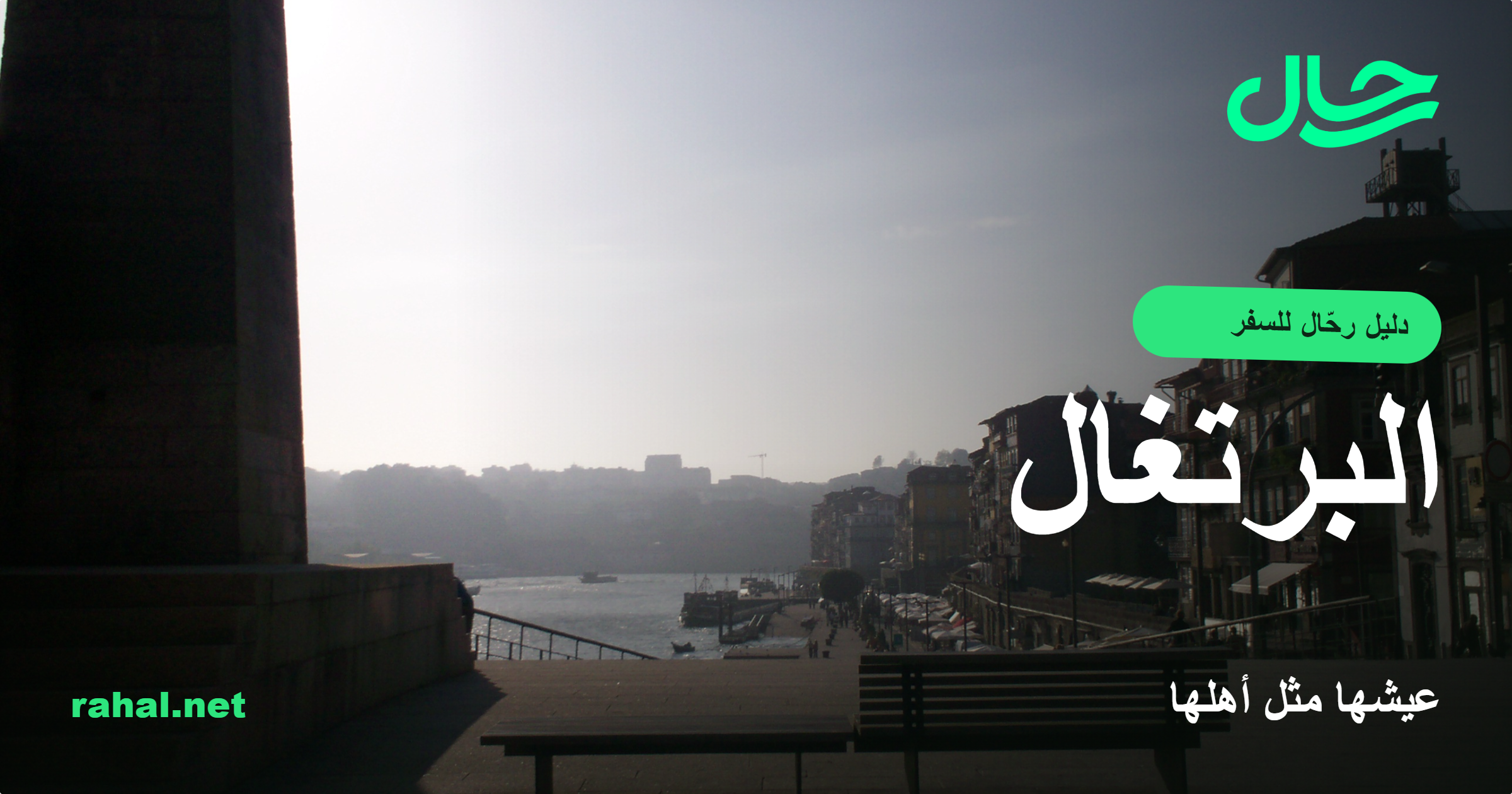
Portugal Like a Local: The Real Travel Guide for Iraqis
The mistake every tourist visiting Portugal makes is treating it as "cheap Spain." They fit it in as a minor stop before or after Madrid, photograph the Belém Tower, eat a pastel de nata, and go home thinking they understood the place. Portugal runs far deeper than that: a country that was once the greatest maritime empire in the world, leaving its language behind in Brazil, Angola, Mozambique, and Macau, and now living a calm that resembles "saudade" — a Portuguese word with no exact translation, a blend of longing, yearning, and quiet contentment. This article isn't a list of landmarks. It's a guide to living.
Who lives there?
Portugal has around 10 million people, one of the smallest populations in Western Europe. Nearly half the country is split between two effective capitals: Lisbon in the south and Porto in the north. The rest is spread across quiet countryside and coastal towns living at a completely different pace.
The Portuguese are shy by European standards — less direct than Spaniards, less formal than Germans — but their warmth is deep and genuine for those who take the time to get close. English is widespread among the younger generation and common in Lisbon and Porto, while Portuguese is essential in rural areas and small towns.
Portugal has become one of the most welcoming European countries for immigrants in recent years. There's a large Brazilian community, along with communities from Angola, Cape Verde, and other Portuguese-speaking countries, plus a wave of Europeans and Americans seeking a quieter, cheaper life. This has made Lisbon in particular a rapidly transforming city.
The daily rhythm: the Portuguese live a calmly balanced life — morning coffee at the café isn't optional, it's a social ritual. Lunch is the most important meal, often eaten with colleagues at a nearby restaurant. Dinner starts from 8 pm onward. Nightlife starts late but doesn't reach Spain's extremes.
How much does daily life cost?
The median net salary in Portugal is around €1,200–1,400/month in Lisbon, among the lowest in Western Europe. This gap between low salaries and Lisbon's high rents is a real crisis many Portuguese people face.
For foreigners, visitors, and remote workers, the equation looks completely different. A one-bedroom apartment in central Lisbon ranges from €1,200–1,600/month (rents have risen sharply in recent years). Outside the center, €900–1,200. Porto is cheaper: its center runs €850–1,100, and outside it €600–850. In smaller cities like Aveiro, Coimbra, and Braga, rents start from €500.
A monthly transit pass in Lisbon (the Navegante card) costs about €40 and covers the metro, buses, trams, and even regional trains. A single ticket costs €1.50 (you need a Via Viagem card for this price — without it, you'll pay double).
Surprisingly cheap: espresso for €0.60–1 (among the cheapest in Western Europe), pastel de nata for €1 or less at local bakeries, a full meal at a tasca (a local neighborhood restaurant) for €8–12. Expensive: rent in central Lisbon, and restaurants in tourist neighborhoods.
The honest truth: Lisbon isn't as cheap as it was 5 years ago. But it's still 40% cheaper than Paris and 43% cheaper than London.
(Numbeo Lisbon 2026 figures: numbeo.com/cost-of-living/in/Lisbon)
How do locals get around?
Lisbon has a 6-line metro, a historic tram (the famous Tram 28), and funiculars (elevadores) to get over its steep hills. Those hills are visually stunning but exhausting to walk — learn the location of the funiculars and cable cars in advance. Porto has gentler terrain and is more walkable.
Uber is much cheaper than traditional taxis in Lisbon, and most residents use it daily. The classic green-and-black taxi still exists but at higher prices.
Between cities, the trains are a marvel: Lisbon to Porto takes 2 hours 45 minutes on the Alfa Pendular train, costing €25–35 booked in advance. Lisbon to the Algarve takes 2.5 hours. Buy tickets early through the CP (Comboios de Portugal) website — the price gap between early and last-minute booking is huge. Inter-city buses run by Rede Expressos are a cheaper alternative.
What confuses visitors: the famous Tram 28 through Lisbon's old neighborhoods is a genuine mode of transport used by locals, but the tourism wave has made it extremely crowded during peak hours. If you want to experience it, ride it early in the morning or before mid-afternoon.
What do they eat, and when?
Portugal is one of the highest fish-consuming countries in the world, and that's not an exaggeration — the Portuguese eat fish daily. Bacalhau (salted, dried cod) is the national icon: they say there are 365 recipes, one for every day of the year. If you're not a fish person, don't worry — there's plenty of meat and grilled dishes too, but you'll notice fish everywhere.
Dishes you must try: pastel de nata — custard cream in crispy pastry, best hot from the oven with cinnamon and sugar. Its birthplace is the Pastéis de Belém bakery near Lisbon, with a permanent line outside. The top street snack, priced €2–4. Caldo verde — Portuguese green cabbage soup, simple and comforting. Grilled sardines — especially in June during the Festival of Saint Anthony, when Lisbon's streets fill with the smell of grilled sardines, an unforgettable olfactory memory.
In Porto, Francesinha is the local food identity: a massive sandwich covered in cheese, tomato sauce, spicy beer sauce, and an egg on top. It sounds strange and becomes addictive.
Worth remembering: on the night of June 12, the eve of the Festival of Saint Anthony, all of Lisbon takes to the streets — a massive celebration of grilled sardines, music, and people in the Alfama, Mouraria, and Baixa neighborhoods. This one night alone is worth rearranging your travel dates for.
The unwritten rules
The Portuguese speak calmly and modestly — raising your voice in public places draws negative attention. At any fado performance, complete silence is expected during the singing — total silence, no whispering, no clinking dishes. The music demands a respect similar to a classical concert.
Greetings: a handshake for men, cheek kisses between women or between a woman and a man. Modesty is valued — showing off is off-putting. "Obrigado" (thank you, said by a man) or "Obrigada" (said by a woman) — learn this distinction and the Portuguese will smile.
The overtourism crisis: Lisbon is under intense tourism pressure. Locals complain the city is turning into a museum for visitors while they're being priced out by rising rents. Be sensitive to this, and avoid acting like you're dealing with a backdrop rather than real life.
You'll come across as clueless if you: say "the Portuguese speak Spanish" (two completely independent languages, and this is considered insulting), confuse Portuguese fado with Spanish flamenco, or describe Portugal as "cheap Spain" in front of any Portuguese person.
Where do locals live?
In Lisbon, locals live in neighborhoods far from the crowded tourist center: Benfica, Belém, Oeiras, Amadora, and Alvalade — with rents that fit their salaries. Inner neighborhoods like Bairro, Campo de Ourique, and Alvalade give you real life at prices lower than the center.
For long-term rentals as a resident, search through Idealista or Imovirtual (the most used in Portugal). For mid-term rentals (one to six months), the Spotahome and Flatio platforms specialize in this. Porto is cheaper and less crowded, and many remote workers choose it as a quieter alternative.
A secret locals know: small towns 30 minutes from Lisbon by train, like Setúbal and Sintra, give you an authentic Portuguese life at a third of Lisbon's price.
🎵 Hear Portugal before you arrive
Fado is the voice of Portugal — music born in the poor neighborhoods of Lisbon in the 19th century, described by UNESCO as "intangible cultural heritage." A sound that expresses saudade: longing for what's past, yearning for what will never return, and staying present together in the moment. Its most important artists: Amália Rodrigues (the legend), Mariza, and Ana Moura. But Portugal also listens to African batuque music from its colonial legacy, Angolan kizomba music which has become popular there, and a wave of contemporary young artists blending fado with electronic music.
For the Iraqi traveler 🇮🇶
Visa: Iraqi passport holders need a mandatory Schengen visa to enter Portugal. Portugal doesn't have a direct embassy in Baghdad, so Iraqis apply through VFS Global in Baghdad and Erbil (the official representative). Requirements: a passport valid for at least 3 months beyond your departure date from Schengen, no older than 10 years, two blank pages, two photos with a white background, a signed application form, a flight booking, a hotel booking or invitation letter, a 3-month bank statement, travel insurance with coverage of at least €30,000, and a cover letter explaining the purpose of your visit. The application fee is €90 for adults. Processing usually takes two weeks to a month — apply early. Confirm information on the official VFS Global website. (Verified: June 2026)
Important note: if your trip passes through Spain or includes multiple Schengen countries, you must apply at the embassy of the country where you'll spend the most time. If Portugal is your main destination, apply through VFS Global for Portugal.
Flights: There are no direct flights from Iraq to Portugal. The most common route: Turkish Airlines from Baghdad and Erbil to Lisbon via Istanbul (10–12 hours total). TAP Portugal also connects via Frankfurt or Paris. Lisbon Airport (LIS) is close to the city — a direct metro ride costs €1.65 to downtown.
Cash and cards: Cards are accepted almost everywhere, including small restaurants. Cash is useful for local markets, bakeries, and small bars. A Wise or Revolut card saves you on transfer fees. Make sure to get a Via Viagem card upon arrival for transit — it automatically gives you the discounted fare.
Halal food: Halal food exists in Lisbon but is less common than in Spain. In the Mouraria neighborhood and some other Lisbon areas, you'll find halal Turkish and Moroccan restaurants. In Porto, options are more limited but exist. The HalalTrip app is useful. The Portuguese don't hide food ingredients — if you ask about pork, they'll answer honestly. Avoid Francesinha in Porto (it contains pork) and always check bacalhau — it's inherently halal salted fish.
Arab community: The Arab community in Portugal is relatively small compared to Spain and Germany. Moroccan and Algerian communities exist but aren't large. Lisbon has more communities from Portuguese-speaking African countries. Connect through Facebook groups like "Arabs in Portugal" for practical guidance.
The honest take
Portugal is the calmest and most spiritually deep of the four countries in this series. It's not necessarily the best fit for a traveler wanting Spain's energy or Germany's organization — but for a traveler who wants to sit slowly, listen, and think, Lisbon and Porto give you that generously.
What's genuinely hard: Lisbon's rents have risen sharply, making it less appealing for limited budgets. The solution: Porto or smaller cities give you a better experience at a lower cost.
What gets overlooked: Porto — many visitors go only to Lisbon and miss Porto, despite it being a charming riverside city with iron bridges and streets famous for their restaurants. And more importantly: the Algarve in the south — the best beaches in Western Europe according to many experts, with orange cliffs and unbelievable coves. Who it suits: the Iraqi traveler who wants calm, natural beauty, excellent seafood, and human-scale cities that soothe the soul.
Bottom line: Portugal teaches you that longing can be beautiful even for a place you've never lived in before — that's saudade, and you'll feel it from your very first night in Alfama.
FAQ
Does an Iraqi passport need a visa for Portugal?Yes, a Schengen visa is mandatory. Portugal has no embassy in Baghdad — apply through VFS Global in Baghdad or Erbil. The application fee is €90 for adults. The same visa lets you visit 26 other Schengen countries.
How much does a trip to Portugal cost for an Iraqi traveler?A budget traveler (hostel, local food, public transport) needs €60–80 daily. A traveler at a mid-range hotel with restaurants needs €120–160 daily. A round-trip flight from Baghdad to Lisbon runs $550–900 depending on season.
What's the best time to visit Portugal from Iraq?Two ideal windows: May and June (wonderful weather, the Festival of Saint Anthony on June 12, fewer crowds than peak season) and September and October (mild heat, lower prices, Algarve beaches still lovely). Avoid July and August: the highest prices and heaviest crowds.
Why visit Porto and not just Lisbon?Lisbon is the capital and exciting but pricey and crowded. Porto is smaller and more authentic: a wonderful meeting point between preserved heritage and vibrant youthful life. Many say Porto's experience runs deeper. The ideal solution: a few days in each.
Is English enough to get by in Portugal?In Lisbon, Porto, and tourist areas, yes, it's sufficient. In inland regions and villages, English is less common. A few Portuguese words make a big difference: obrigado/obrigada (thank you), por favor (please), bom dia (good morning).
Sources: Numbeo Lisbon, Portugalist.com, Anchorless.io, imin-portugal.com, VFS Global Iraq, visitworld.today. Last updated: June 2026.