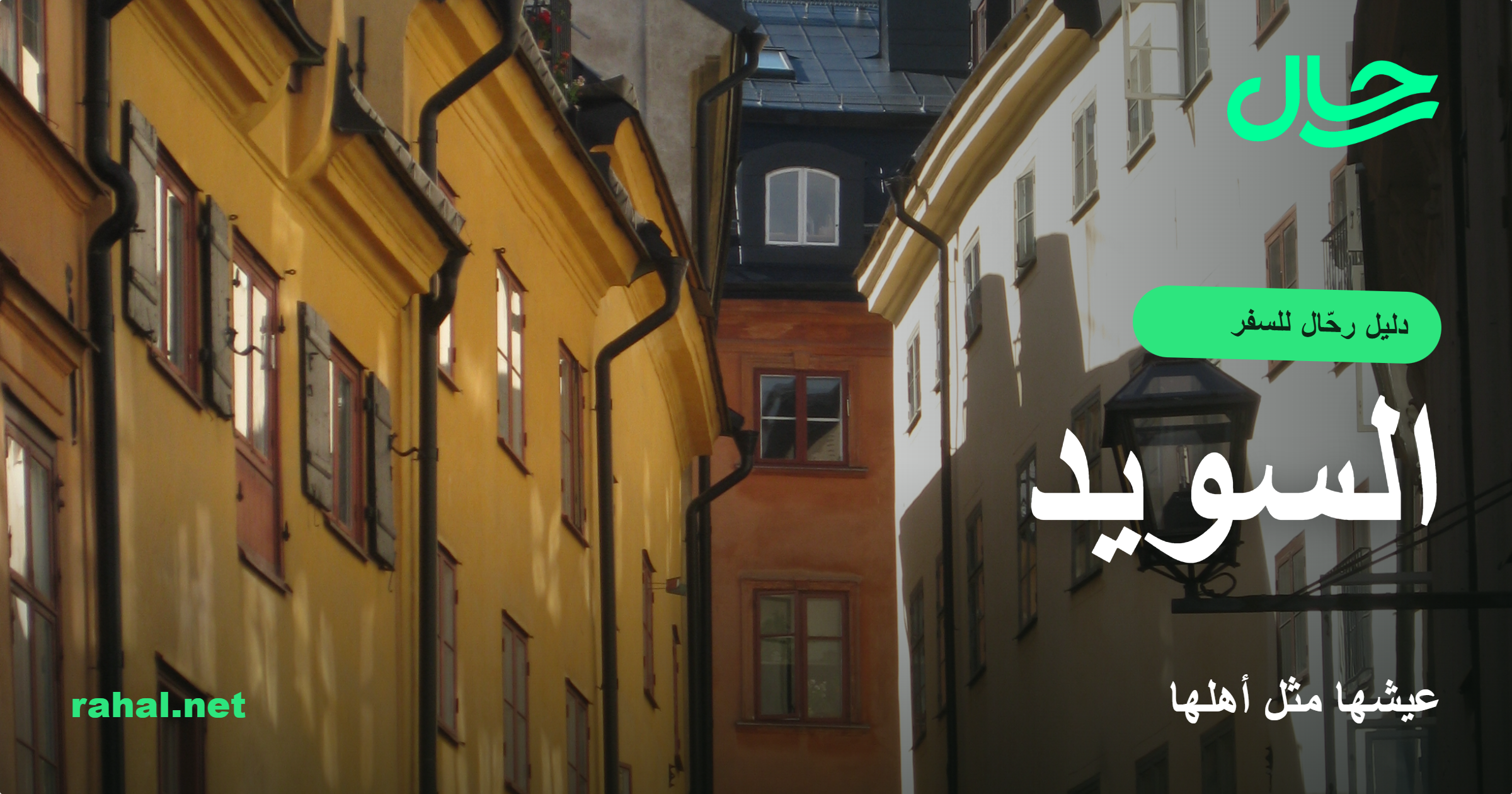
Sweden Like a Local: The Real Travel Guide for Iraqis
The mistake every tourist visiting Sweden makes is coming looking for the northern myth: northern lights, Vikings, and snowy silence. Sweden is far more contradictory and alive than that image. Its people live with meticulous organization, drink coffee five times a day, and believe nature is a right for everyone — even if the land technically belongs to someone else. This article isn't a list of landmarks. It's a guide to living.
Who lives there?
Sweden has around 10.5 million people, with a median age of 41 — a mature, orderly society but with values quite different from Germany or France. Over 87% of the population lives in cities. The official language is Swedish, but English functions as a near-official second language, with a very high proficiency level even among the elderly.
Religion: Sweden is one of the most secular countries in the world — fewer than 20% identify as genuinely religious, though the Lutheran Church still has cultural presence. Muslims make up around 8% of the population (over 800,000 people), and the Arab community is large and well-established, especially in Stockholm, Malmö, and Gothenburg.
The concept of lagom is Sweden's spirit: not too much, not too little — "just the right amount." Not austerity, not excess; not loud, not dead silent. Swedish life revolves around it: house size, portion sizes, even how people speak.
Another concept worth knowing: allemansrätten (everyone's right to nature). Under Swedish law, you can walk, camp, and pick wild fruit on any land, even private, as long as you don't damage it. This isn't just a law — it's a daily culture.
How much does daily life cost?
Sweden is clearly one of the most expensive countries in Europe. Stockholm residents earn an average of 38,000 SEK/month (≈$3,500) net, reflecting the price level. A meal at a budget restaurant costs about 130–160 SEK ($12–15), and a practical office worker's lunch from a supermarket costs 50–70 SEK.
Rent is the biggest expense: a one-bedroom apartment in central Stockholm ranges from 12,000–15,000 SEK/month ($1,100–1,400), dropping to 8,000–10,000 SEK outside the center. A monthly transit pass in Stockholm costs about 860 SEK ($80) and covers all public transport in the city.
Surprisingly cheap: ICA and Lidl supermarkets are relatively reasonably priced, nature is entirely free (walking, camping, and lakes with no fees), and many museums are free. Very expensive: mid-range restaurants and above, and anything "touristy."
(Numbeo Stockholm 2026 figures: numbeo.com/cost-of-living/in/Stockholm)
How do locals get around?
Stockholm has an excellent public transit network: the Tunnelbana (metro), Pendeltåg (commuter rail), trams, and buses, all covered by a single app called SL. A monthly pass covers all of it. The city is built across 14 islands, and ferries are part of the regular public transport system, not a tourist gimmick.
Cycling is a deeply rooted culture in summer. Every Swedish city has separate, safe bike lanes. In winter, people keep cycling even through snow — this isn't rare or exaggerated.
Between cities: SJ trains are excellent and connect all of Sweden. Stockholm to Gothenburg takes 3 hours, and Stockholm to Malmö takes 4.5 hours. Book in advance through the SJ app for cheap fares. Domestic flights exist but aren't worth it for typical distances.
What confuses outsiders: Swedes queue without a word of complaint. Queuing is sacred, and being late is very rare. If you arrive exactly on time, you're on time. If you arrive two minutes after, you're late.
What do they eat, and when?
Swedish breakfast is simple but balanced: knäckebröd (thin crispbread) with cheese or smoked salmon, and coffee is non-negotiable. Breakfast at home is quick and practical; cafés open from 7 or 8 am.
Fika is the most important food concept in Sweden: a coffee break with cake or a pastry, at least twice a day (morning and afternoon) — it's not just eating, it's a mandatory social ritual at work, at home, and among friends. Refusing fika carries a hint of social offense.
Lunch runs from 11:30 am to 1 pm, earlier than you'd expect. Dinner is from 6–8 pm. Restaurants close early compared to southern European countries.
Dishes you must try: Swedish meatballs with cream sauce and lingonberry jam, surströmming (fermented sardines — for the brave only, its smell is far worse than its taste), kanelbullar (Swedish cinnamon buns, the classic fika pastry), and gravlax (dill-cured salmon).
A myth worth busting: that Swedish food is heavy and bland. True only for the traditional winter version — immigrant cuisines in Malmö and Stockholm rival many European capitals.
Worth remembering: every Friday from May to August, the Östermalmshallen market square in Stockholm turns into an open-air market. Fresh fish, vegetables, local cheese, and real people — not tourists. Entry is free, and the experience is unforgettable.
The unwritten rules
Swedes are quiet on first meeting in a way that can seem cold or arrogant to an Arab. That's not accurate — they're respectful and giving you your space. Warmth comes after you get to know them, not on a first meeting. Don't expect an automatic smile from a stranger, and don't take it as an insult.
Personal space is serious: don't stand close to someone you don't know, and don't touch them without reason. Even on crowded transit, people avoid pressing against each other.
Volume in public places: the metro, restaurants, and libraries are nearly silent. Talking loudly draws annoyed attention.
Acceptable conversation topics: nature, sports, weather, and travel. Sensitive topics: salary (don't ask unless you're close friends), and domestic politics with strangers.
What shows poor manners: littering anywhere (fines exist but social disapproval is stronger), standing on the left side of an escalator (the left is always for walking), and making noise in residential areas after 10 pm.
Where do locals live?
Stockholm is built across islands, and locals live in neighborhoods far from the tourist center. Södermalm is the neighborhood of intellectuals and artists, Hammarby is the modern sustainable neighborhood, and Solna and Nacka suit families outside the city.
Renting in Sweden has a real problem: the waiting list for government-subsidized apartments in Stockholm can reach 10–20 years. Locals use Blocket.se and Hemnet for private rentals, which are pricier but faster. As a visitor for a week or more, Airbnb or Booking.com is the practical choice.
Housing customs: if invited to a Swedish home, take off your shoes at the door without waiting to be asked. Bring something (sweets or flowers). Punctuality is mandatory. Swedish homes are very clean and strikingly tidy.
🎵 Hear Sweden before you arrive
Sweden is one of the world's biggest unexpected music exporters: ABBA, Avicii, Robyn, The Hives, Ace of Base, and dozens of producers behind some of the biggest pop songs globally. Swedish death metal from Gothenburg has a massive global following. And traditional polska music (a dance and musical form) is still alive in the Swedish countryside.
For the Iraqi traveler 🇮🇶
Visa: Iraqi passport holders need a mandatory Schengen visa to enter. Apply at the Swedish Embassy or an accredited consulate, or through the VFS Global center in Erbil. Standard requirements: a valid passport, confirmed bookings, travel insurance, and a 3-to-6-month bank statement. The application fee is around €80. Processing takes two weeks to a month — apply early. (Verified: June 2026)
Flights: There are currently no direct flights from Iraq to Sweden. Turkish Airlines is the most used, from Baghdad and Erbil to Stockholm via Istanbul. FlyDubai and Emirates via Dubai. Qatar Airways via Doha. Stockholm's main airport is Arlanda (ARN), and Skavsta airport serves budget flights but is farther from the city.
Cash and cards: Sweden is one of the most cashless countries in the world. Many restaurants and shops refuse cash entirely and accept cards only. Visa and Mastercard are essential. A Wise or Revolut card is ideal for exchanging at the real rate. Carry only a small amount of cash (kronor) for small markets and rural areas.
Halal food: Stockholm, Malmö, and Gothenburg have wide halal options. The Rinkeby neighborhood in Stockholm (the most well-known Arab neighborhood) is full of Arab and halal restaurants. Malmö has proportionally the largest Arab community in Sweden and even wider options. Use the Zabihah app or search Google Maps for "halal restaurant" in any city.
Community: The Iraqi community in Sweden is one of the largest in Europe, especially in Stockholm, Gothenburg, and Södertälje, sometimes called "Little Baghdad" for its dense Iraqi and Assyrian population. Facebook groups like "Iraqis in Sweden" have useful, up-to-date practical information.
The honest take
Sweden is a genuinely comfortable destination for an Iraqi traveler: a large Arab community, widely available halal food, and everyday safety nobody worries about. Cost is the biggest challenge — it's clearly one of the most expensive destinations in Europe, and a traveler who doesn't plan well can end up spending double what they expected.
What gets overlooked: Södertälje, a small town 35 km from Stockholm with a huge Assyrian and Iraqi community, high-quality grill and Arab restaurants, giving you the feeling of being in Europe and at home at the same time. Also Kiruna in northern Sweden, the town that lives 24-hour sunlight in summer and 24-hour darkness in winter — an experience you can't quite imagine.
Who it suits: the Iraqi traveler who wants a calm, organized Europe with a comfortable Arab community, who loves nature, walking, and lakes, and who's willing to spend more for cleanliness, safety, and calm. Not for someone wanting bustling cities and resorts.
Bottom line: Sweden teaches you that quiet isn't emptiness, and that space between people can be respect, not coldness.
FAQ
Does an Iraqi passport need a visa for Sweden?Yes, Iraqi passport holders need a mandatory Schengen visa to enter Sweden and any Schengen country. Apply at the Swedish Embassy or the VFS Global center in Erbil. Apply at least a month before your trip, as appointments can be busy.
How much does a trip to Sweden cost for an Iraqi traveler?A budget traveler needs roughly $80–110 daily (hostel, supermarket food, public transport). A traveler at a mid-range hotel with restaurants needs $160–230 daily. Sweden is one of the most expensive destinations in Europe — plan your budget accordingly. A round-trip flight ranges from $500–850 depending on season.
Is halal food available in Sweden?Yes, especially in Stockholm, Malmö, and Gothenburg. The large Arab community has made halal restaurants available in many neighborhoods. The Rinkeby neighborhood in Stockholm and Rosengård in Malmö have a strong concentration of halal restaurants and shops.
Is English enough to get by in Sweden?Exceptionally so. Sweden has one of the highest levels of English as a second language in the world, even among older generations. You won't need a single word of Swedish in big cities. In very small villages you might need basic help.
What's the best time to visit Sweden from Iraq?Two ideal windows: June and July (Swedish summer is wonderful, very long days reaching up to 20 hours of light, nature at its best, music festivals), and December and January (if you want snow and northern lights up north, though the cold is harsh). Avoid March and April weather-wise — gray, cold, with no snow and no greenery yet.
Do I need a car in Sweden?Within Stockholm, Gothenburg, and Malmö, you never need one — public transport is excellent. A car is only useful if you want to freely explore the Swedish countryside, lakes, and northern regions.
Sources: Wikivoyage (CC BY-SA), CIA World Factbook (public domain), cost figures from Numbeo Stockholm, VFS Global Iraq for visa information. Last updated: June 2026.